Easy Japchae with Wood Ear Mushrooms
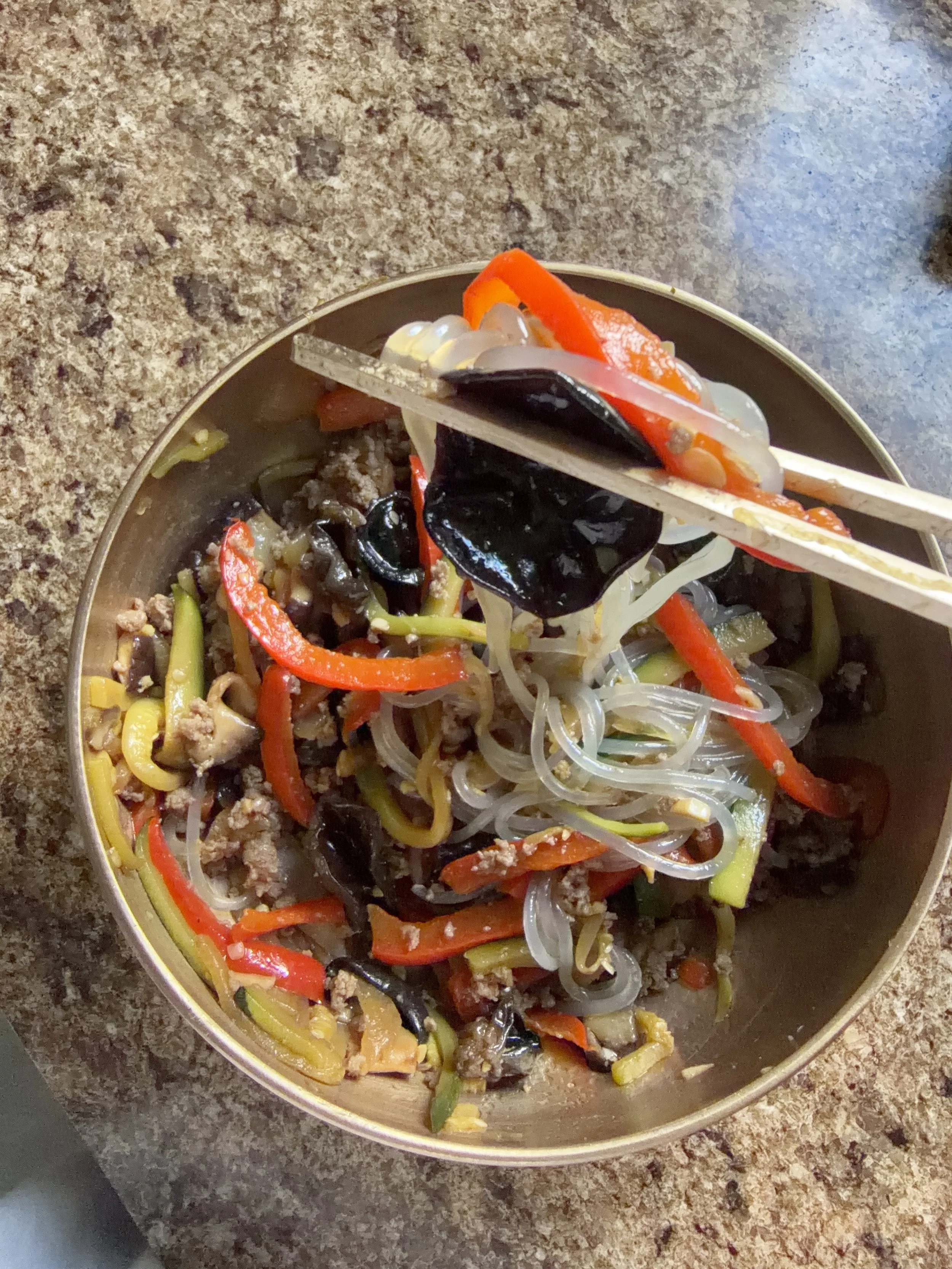
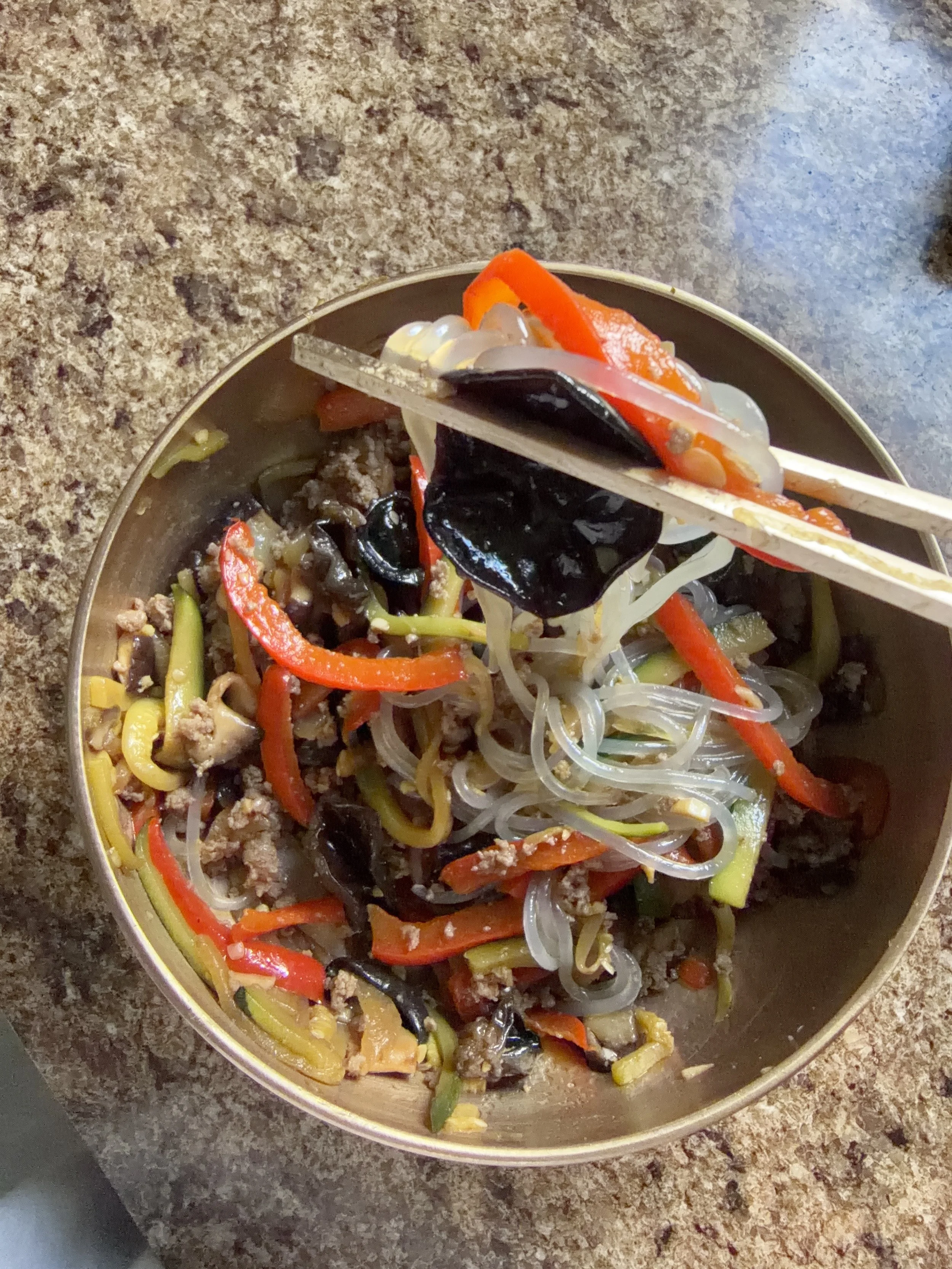
This easy ground meat japchae is packed with savory garlic, chewy wood ear mushrooms, colorful vegetables, and tender Korean sweet potato glass noodles. It's a simple weeknight version of japchae that uses ground meat instead of sliced beef and coconut aminos instead of traditional soy sauce + refined sugar.
Spoiler Alert—
The dried wood ear mushrooms are the secret ingredient to elevating this recipe.
They rehydrate into tender, wonderfully crunchy/bouncy mushrooms that soak up the savory sauce while adding an amazing texture to the noodles.
I highly reccomend Clear Source Organic Wood Ear (Black Fungus) Mushroom (code: MUMWITHABUN for max. savings) for this recipe because it’s
Organic Grade – Certified Organic
Sulfur-Free - to avoid toxic sulfur dioxide bleaching / preservatives. Sulfur’s often used to extend shelf life of mushrooms like this.
Pesticide-Free - so key as mushrooms absorb whatever is in their growing medium, and USDA Organic standards restrict synthetic pesticides, fertilizers, and toxic chemicals in the logs, sawdust, or substrate
Independently Lab-Tested
The texture is wonderful - no hard bits to trim off - the ones you usually find at the grocery store require trimming! I’m all about less work in the kitchen and a more enjoyable dining experience
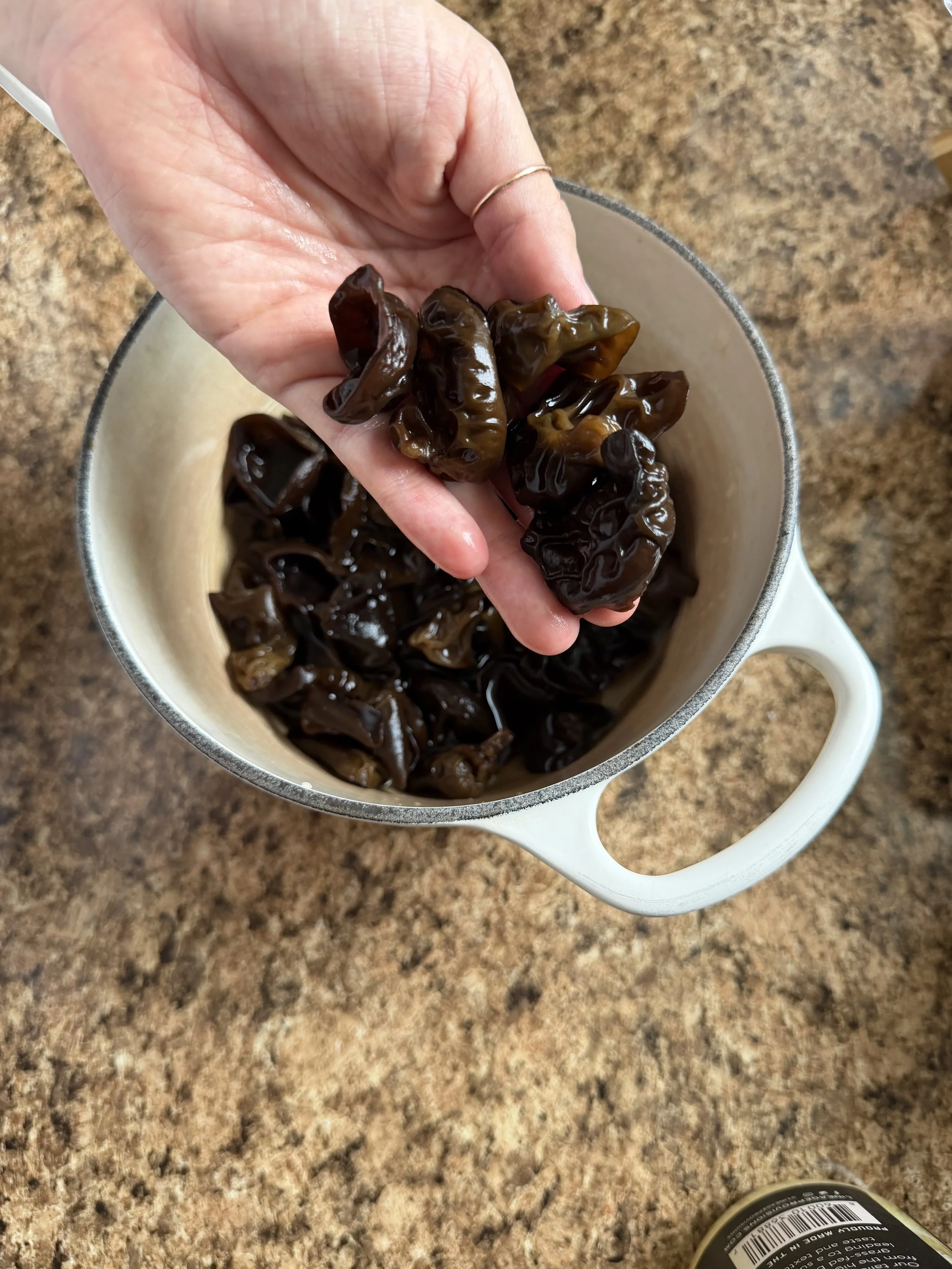
They look like tiny, black, crinkled pieces of bark when they're dry.
Then they become large, ruffled, springy mushrooms when rehydrated.
They are mild in flavor, so their biggest contribution is texture & Koreans love it for its
potential hair benefits (they believe it helps with hair loss - a huge win for me / postpartum mums)
Ability to deeply hydrate & nourish skin as it helps with natural collagen production
Digestion supporting properties (high fiber)
Bulgogi Style Ground Meat Japchae
Ingredients
For the japchae
1 pound grass-fed ground beef (pork, chicken, or turkey work too)
20 grams Organic dried wood ear mushrooms
8 ounces Korean sweet potato glass noodles (dangmyeon/vermicelli)
1/2 medium onion, thinly sliced
1/2 red bell pepper, thinly sliced
2 shiitake mushrooms, thinly sliced
1 small zucchini, cut into thin matchsticks or half-moons
4–6 cloves garlic, minced
3–4 tablespoons coconut aminos
1 tablespoon toasted sesame oil (optional)
1–2 tablespoons grass-fed tallow
Sea Salt, to taste
Black pepper (optional, not recommended for those concerned about stones)
Method
1. Rehydrate the wood ear mushrooms
Bring water to a boil in a pot. Turn off the heat once it boils.
Pour 20 grams dried wood ear mushrooms into the pot and let them sit for 30 minutes, until they’re completely rehydrated.
Drain, rinse thoroughly, trim the tough attachment points if you purchase them from the supermarket, (I skip this step as these organic ones don’t have tough attachment points) and slice into thin strips.
Set aside.
2. Prepare the veggies
While the mushrooms are soaking, prepare all of your vegetables.
Slice the onion and bell pepper.
Cut the zucchini into thin strips or half-moons.
Mince the garlic.
Japchae comes together quickly once you start cooking, so having everything prepared beforehand makes the process way easier.
3. Cook the glass noodles
Bring a pot of water to a boil.
Cook the sweet potato glass noodles according to the package directions.
Don't overcook.
You want the noodles tender but still pleasantly chewy.
Drain.
You can cut the noodles into shorter pieces with kitchen scissors if you prefer easier-to-eat japchae.
Set aside.
4. Brown the ground meat
Heat a large skillet or wok over medium-high heat.
Add a small amount of tallow.
Add the ground meat.
Break it apart with a spatula and cook until browned and cooked through.
Add approximately half of the minced garlic.
Stir for another 60 seconds until fragrant.
Add 2 tablespoons coconut aminos and stir.
5. Stir-fry the vegetables
Add a dollop of tallow to the pan.
Start with the vegetables that take the longest to cook.
Add the onions.
Stir-fry for approximately 2–3 minutes.
Add the bell pepper, zucchini, shiitake and other veggies of your choice.
Continue cooking until the vegetables are tender-crisp.
You don't want to turn them into mush.
Japchae is good when each vegetable still has a bit of texture.
6. Add the wood ear mushrooms
Add the sliced, rehydrated wood ear mushrooms.
Stir-fry for approximately 3-5 minutes.
You'll notice that they become glossy and pick up the flavors from the garlic, coconut aminos, and veggies.
7. Add the noodles
Add the cooked glass noodles to the pan.
Add the cooked ground meat.
Add the remaining coconut aminos.
Start with less seasoning—you can always add more.
Toss everything together thoroughly. Salt to taste.
8. Finish
Toss for another minute or so.
Turn the heat down.
Add approximately 1 tablespoon toasted sesame oil, if you’re using it.
Toss well.
Taste.
Add additional coconut aminos, if needed.
9. Finish with seeds
Sprinkle with toasted sesame seeds. (We used pumpkin seeds as we manage a sesame allergy)
If you're using green onions, scatter them over the top.
Serve hot or warm.
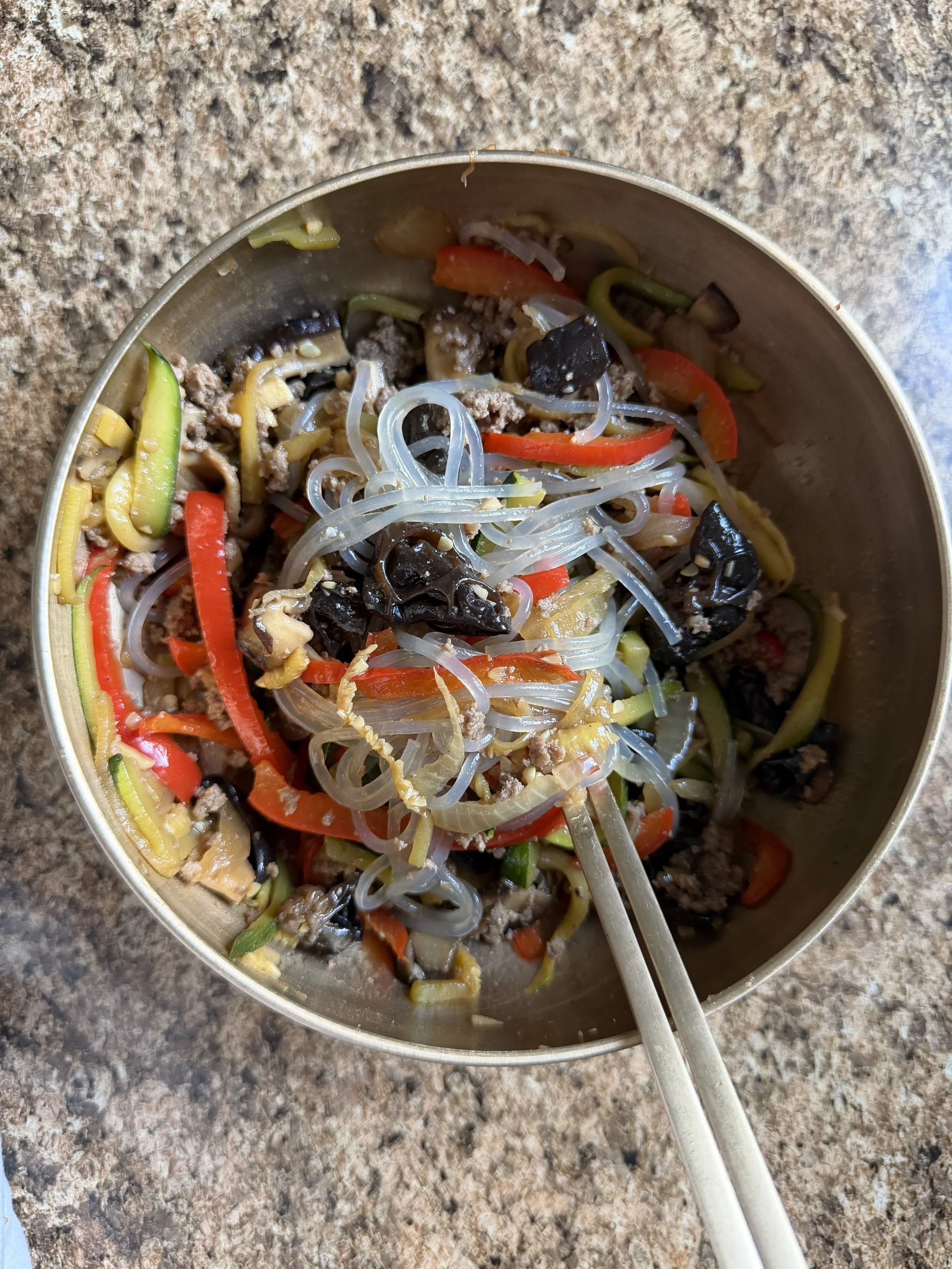
Why You'll Love This Japchae
Uses 1 pound of ground meat, making it hearty and protein-rich
Dried wood ear mushrooms add a nutritious punch + chewy-crunchy texture
Coconut aminos provide savory flavor without traditional soy sauce / added sugar
Naturally customizable with beef, pork, chicken, or turkey
Easy to make gluten-free when using gluten-free noodles and seasonings
Includes several vegetables that are relatively low in oxalate
The Best Low-Oxalate Vegetables for Japchae
If you're intentionally keeping oxalates lower, you have plenty of options that work beautifully in japchae.
Great choices
Bell peppers — red, yellow, orange, or green
Onion
Cabbage
Napa cabbage
Zucchini
Yellow squash
Mushrooms (shiitake & wood ear)
For this recipe, my favorite combination is:
onion + red bell pepper + zucchini + shiitake + wood ear mushrooms.
You don't need all of them. Four vegetables are plenty.
What about spinach?
Spinach is a classic japchae ingredient, but if you're deliberately keeping this recipe lower in oxalate / are concerned about stone development, I'd skip it. Spinach is substantially higher in oxalate (it’s a “stone-former”) than the vegetables listed above.
Oxalate values can vary with variety, growing conditions, preparation, and serving size, so "low oxalate" shouldn't be interpreted as "zero oxalate." If you're following a medically prescribed low-oxalate diet, use the specific food list provided by your clinician or dietitian.
A Few Japchae Tips That Make a Big Difference
Don't dump the whole bag of dried wood ear into the bowl.
This is the classic beginner mistake.
It looks like you barely have any mushrooms.
Then suddenly you have enough rehydrated wood ear to feed an army.
Start with 20 grams.
Don't soak them forever.
30 minutes is good - avoid prolonged room-temperature soaking.
Don't expect a strong mushroom flavor.
Wood ear is relatively mild.
You're buying it for texture, not for the deep umami you get from shiitake.
Don't overcook your veggies.
Japchae is much better when the vegetables retain some bite.
Season gradually.
Coconut aminos vary considerably in saltiness and sweetness.
Start with less and add more after everything is combined. The bulgogi style meat flavor will bring it all together when it comes to flavor depth, but if you want this vegetarian, skip the beef. It’ll still taste great (:
Make the noodles slightly less seasoned than you think you need.
Once the meat, vegetables, garlic, and coconut aminos are mixed throughout, the flavor becomes much more pronounced.
Can You Make This Ahead?
Yes.
Japchae is one of those dishes that makes an excellent leftover meal.
Store leftovers in the refrigerator in a covered container.
When reheating, add a tiny splash of water and gently warm the noodles in a skillet or microwave.
A few drops of sesame oil at the end can bring the noodles back to life.
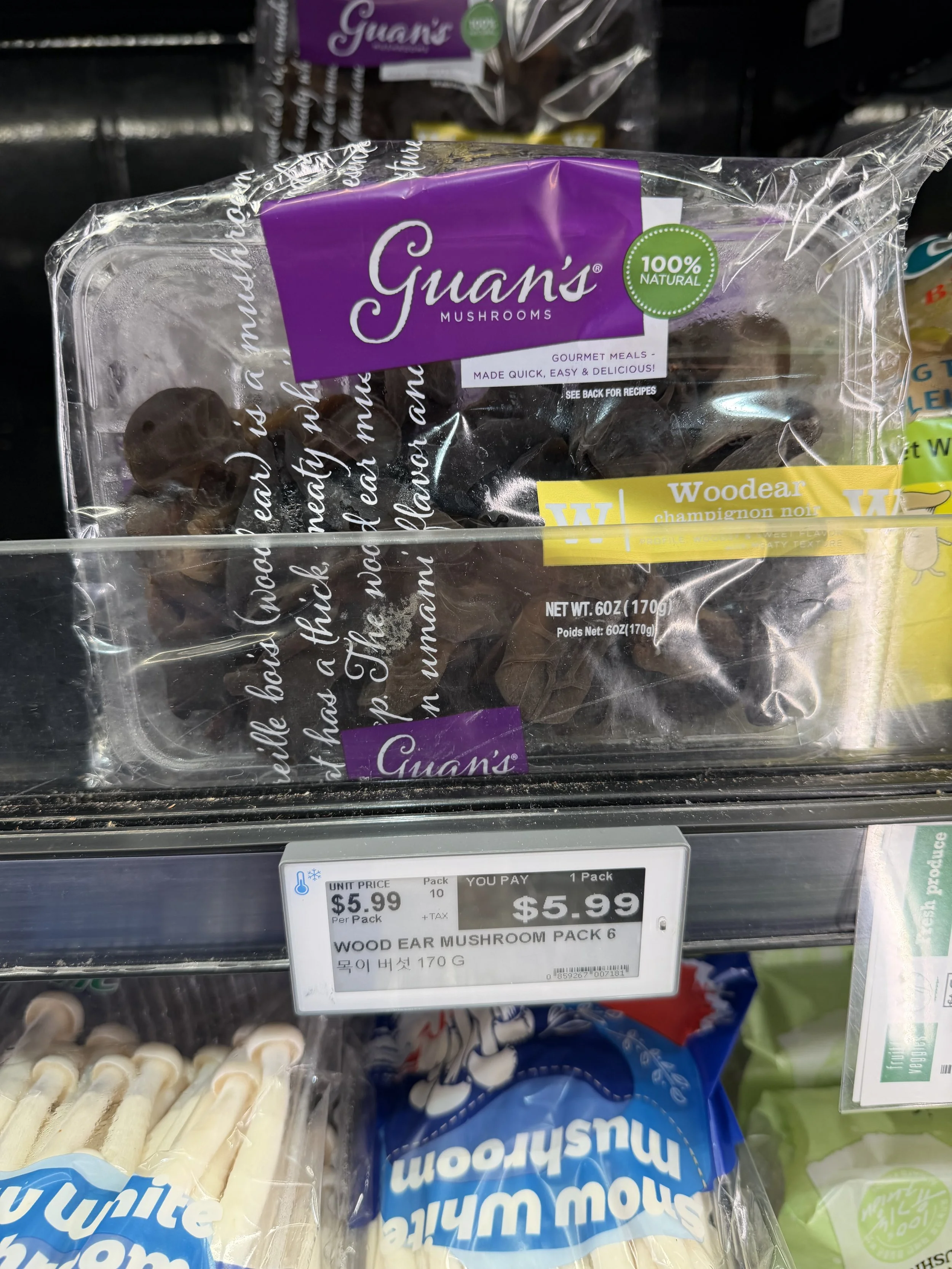
Store-bought wood ear isn’t exactly sulfur free / tested for contaminants. Here’s where I get my organic, 3rd party tested bag: Clear Source.
How to Prepare Dried Wood Ear Mushrooms
If you've only eaten wood ear mushrooms prepared by someone else, don't be intimidated by the dried version.
I love that they absorb the flavors around them and provide that characteristic crunchy-chewy bite.
How much dried wood ear should you use for this recipe?
20 grams dried wood ear mushrooms
If your mushrooms are very large pieces, a small handful is plenty.
Don't worry if that looks like almost nothing. Dried wood ear expands substantially when rehydrated.
Step 1: Rehydrate the wood ear
Put the dried mushrooms in a large heatproof bowl/saucepan.
Cover them generously with boiling water.
Let them sit for approximately 30 minutes. The mushrooms will unfold and become soft and flexible.
Important food-safety note
Don't leave rehydrated wood ear mushrooms sitting on the counter for hours or overnight.
If you need a longer soaking period, refrigerate them rather than leaving them at room temperature.
Step 2: Drain and rinse
Drain the soaking water.
Rinse the mushrooms thoroughly using filtered water, opening up the folds with your fingers.
This is important because dirt and grit can hide inside the ruffled surfaces. The organic ones I use are quite pristine and don’t require much washing.
Don't save the soaking water for your sauce. Unlike dried shiitakes, wood ear is primarily being used for its texture rather than its flavorful soaking liquid.
Step 3: Trim the mushrooms
If you’re not using the organic wood ear I use, look for the small, tough attachment point on each mushroom.
Snip it off with kitchen scissors.
You don't need to remove every bit of the mushroom's stem—just the hard, woody portion.
For japchae, I like it whole, but most people like strips: cut it into approximately ¼-inch-wide strips.
Step 4: Cook the mushrooms
The final stir-frying step (cook it with the other veggies) will cook them further.
The finished wood ear should be tender but wonderfully springy with some crunch.
The Bottom Line
In my opinion, dried wood ear mushrooms are absolutely worth adding to your japchae for the health benefits and the texture and I’m so excited I found a clean source for them ♡