Our Breastfeeding Journey
3 years & 4 months of breastfeeding.
I didn’t know our journey’d last as long as it did.
It was never easy, but with support, I was empowered and determined to breastfeed at the start of the pandemic and endured through multiple surgeries.
Why? Initially, I wanted to for the life long health benefits my newborn would receive. Then I heard formula was sold out everywhere (peak of pandemic); I had no choice but to persist. Then Doctors told me the longer I breastfed, the higher her chances were of overcoming her multiple food allergies.. Then I realized I was doing this for me too. I needed her too. The connection and relationship we have is in large part because of our decision to make breastfeeding work.
Here are my conclusions this #breastfeedingawarenessmonth
There needs to be more accessible breastfeeding resources (I.e. affordable lactation consultants, studies, and shared stories about breastfeeding journeys)
While our journey now feels like a long, wind-y, painful, and rewarding dream, I am grateful. I lived under the narrative that my body was broken, but no more do I believe that. I am grateful God gifted me the ongoing support of my husband to continue breastfeeding as long as we did. an absolute team effort. He’d carry her to me when I could not move post surgery. He’d help me pump / wash all the things. He supported me when others ridiculed me. He researched for me when I hit my wits end postpartum - my milk oversupply made life unbearable, painful, and impacted my mental & physical health (Oversupply is a double edge sword that no one speaks of for fear of being hated because a common pain point of breastfeeding is an under supply)
While the beneficial properties of breastmilk did not end, I chose to wean - I needed to sleep through the night & my health had to be prioritized. I explained to the best of my ability why we had to wean and she understood to the best of hers 💛
Friends, support your mum friends if they choose to breastfeed. Support them when they need to wean.
At our last nursing session we had a chat—
Me: Emma, are you sad?
Her: A little bit… but I’m still happy! But I still a little sad.
Me too, girl. Mum too.
Is Liver Dangerous in Pregnancy?
The Misleading Liver Myth
Myth: “Eating liver causes Vitamin A toxicity… so liver is dangerous in pregnancy”
Why I have a problem with this common misconception
The reason liver has been placed on some “Do not eat when pregnant” lists is simply because it’s rich in vitamin A.
VITAMIN A
Essential for a healthy pregnancy, healthy fetal development, and healthy breastmilk
REQUIRED for proper development of baby’s critical organs during pregnancy especially in the first trimester (i.e. eyes, lungs, heart, kidney, and dental arch)
Extra safe when combined with vitamin D and K2 (both of which are present in liver)
Deficiency poses great risk to pregnant mother and baby (i.e. birth defects including congenital diaphragmatic hernia, which is on the rise)
1/3 of pregnant women are deficient in vitamin A
80% of women of childbearing age are not reaching daily recommended intake amount
LIVER is…
Nature’s ultimate “multi-vitamin”—
JAM PACKED with vitamin A, incredibly rich in iron and other nutrients critical for supporting a mum so she can create a healthy baby— folate, zinc, copper, B vitamins (including the beloved B12), brain-building choline (very difficult to get adequate amount via supplementation as it is “big” nutrient and multiple capsules would have to be taken to meet nutrient needs), anti-inflammatory omega-3s, antioxidants, and nearly all the amazing yet hard-to-find nutrients needed to support a healthy pregnancy, postpartum, and toddler’s rapid growth (like Vitamin D, E, K and more)
See how nutrient levels in beef liver & heart compare to ground beef - courtesy of Lilynicholsrdn.com
Misunderstood—
it is NOT filled with toxins — it does effectively detoxify your body by eliminating excess estrogen that most of us struggle with… (I mean, the average woman is exposed to 168 hormone balance disrupting chemicals on a daily basis from beauty products alone… not to mention forever chemicals in our water & toilet paper that also cause estrogen-related imbalances in the body)
One of the best foods a human being (especially the new mother) can consume—
it is one of the world’s more nutrient dense foods.
“Ounce for ounce - liver is probably more nutritious than any other food.” - University of California Berkeley
A “superfood”—
Do you know any other food that remineralizes teeth; supports thyroid health; AND strengthens the intestinal wall? #guthealing
Historically & culturally revered—
Every single time I connect with pregnant & postpartum mums on what food to focus on to meet their and their toddlers’ incredibly high nutrient needs, liver always ends up being the single most “problem solving” food. It’s no surprise to me that historically, liver has been consumed for thousands of years across the globe. Culturally, it is leveraged in the context of “food as medicine” to support those who are pregnant, trying to get pregnant, or sick.
Yet, liver has been labeled as a “dangerous”
WHY IS THERE FEAR AROUND VITAMIN A / LIVER CONSUMPTION?
[*Synthetic supplemental] Vitamin A is correlated with birth defects. Before we all decide to liver should be avoided especially when pregnant because it has a lot of vitamin A, let’s see HOW this vitamins is correlated to birth defects:
Vitamin A as it relates to birth defect risks—
Birth defects related to TOO MUCH vitamin A: 20 cases in the last 30 years
Congenital diaphragmatic hernia (CDH) / a birth defect due to NOT ENOUGH vitamin A: 1,050,000 cases in the last 30 years
CDH defect in an unborn baby's diaphragm, the muscle that divides the chest cavity and abdominal cavity. CDH occurs when the diaphragm does not close the right way during the baby's development and abdominal organs push (“herniate”) through the defect into the chest cavity.
Other birth defect issues linked to inadequate intake of Vitamin A: poor development of eyes, heart, lungs, mouth, and kidneys; inadequate birth weight; full term gestation — and more.
Liver Facts (based on numerous studies)
There has never been a documented case of Vitamin A toxicity related to naturally occurring Vitamin A found in liver (i.e. beef/chicken liver) — see screenshot at the end of this post!
Many mums are told to avoid liver during pregnancy due to a vitamin A toxicity study that was exclusively linked to high-doses of SYNTHETIC (man-made) vitamin A [Source]
An old study was released in 1995 based on pregnant women having 10,000 IU of synthetic vitamin A (which is not related to naturally occurring vitamin A in food). The vitamin A from food sources does NOT have the same level of toxicity as the synthetic vitamin A highlighted in this study.
10,000 IU is the current daily maximum intake level of Active vitamin A that I recommend my clients stay under and that is actually a conservative approach as 10,000 IU/day is unlikely to cause adverse health effects. Studies have shown a daily dose of 30,000 IU does not cause birth defects.
One would have to consume quite a bit of raw beef liver to hit the upper tolerable intake of 10,000 IU of vitamin A since 3oz of raw beef liver = 14,363 IU. Organ / liver capsules (6 capsules) that I recommend contain less than 1,000 IU of naturally occurring vitamin A; many studies since have proved against the theory that liver consumption in pregnancy is not safe.
Again, there is no evidence that naturally occurring Vitamin A (i.e. liver) is toxic especially when paired with sufficient vitamin D & K (both of which are plentiful in liver - God is good!)
In Conclusion…
I highly recommend the consumption of quality liver (in moderation) - a little bit goes a long ways.
As with anything, not too much and not too little is important. It’s about balance and eating [liver] in moderation.
While overdoing vitamin A via liver is very rare, anything’s possible.
In fact the nutrients found in this powerhouse food are critical for a healthy full term pregnancy so I recommend my clients who do not consume enough nutrients (i.e. vitamin A, choline, etc) via their diet to supplement with high quality desiccated beef liver capsules.
Dosing for pregnancy
For pregnancy, I recommend about 3-6 oz of liver weekly, but at the end of the day every body and diet is different and highly personalized. Take a look at your prenatal and check out how much “retinyl palmitate” you’re getting. Subtract that quantity from 10,000 IU and consume no more than that number throughout each day of pregnancy.
For postpartum/breastfeeding mums, I highly recommend Foraged For You (Mother’s Blend) as the liver is fermented and paired with other foods that make the nutrients of liver highly absorbable during this phase where vitamin A needs are quite high.
For non-pregnant folks, 6oz of liver weekly (or more) is fine.
Vitamin A levels in Women (a reminder)
⅓ of pregnant women are vitamin A deficient.
80% of women of childbearing age are not meeting the daily recommended intake of vitamin A.
Liver for Babies
Pasture-raised chicken liver was one of my daughter’s first foods and continues to be one of her favorite foods!
When is it appropriate to start offering it?
Whenever baby is ready to start solids! Developmental signs of readiness usually show up around the 6 month mark.
When is it GOOD to start offering it?
As soon as baby is ready to start eating food - babies need for nutrients that are very difficult to find in other food sources (i.e. iron) are ABUNDANT in even a tiny bit of liver which is perfect as babies don’t have very much real estate in their tiny bellies while their need for nutrients are HIGH
What dosing and frequency is recommended?
For a toddler 6-12 months, 1/2 tsp to 1 tbsp around 3 days a week (or every other day-ish) is a good goal to aim for!
Where can I purchase good quality liver?
Quality liver / organ meats is KEY!
The livers and kidneys of factory-farmed animals usually contain significant amounts of cadmium. — Westonaprice.org
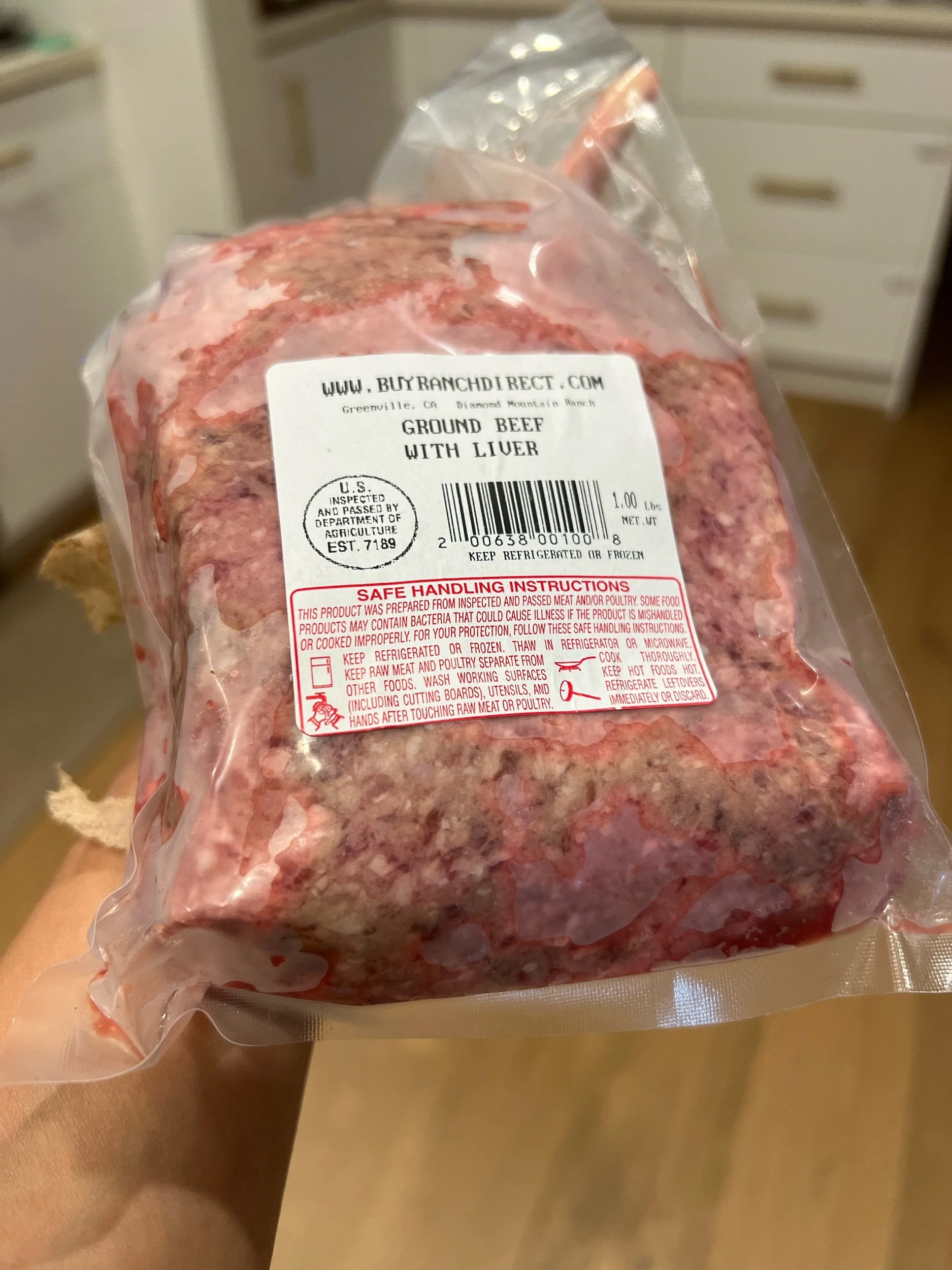
Get in touch with your local butcher at the farmer’s market. Confirm that their chicken liver is pasture raised and that their beef liver is from 100% grass fed cows. In SoCal, I order from Buy Ranch Direct. On island, I order from Forage Hawaii.
Some even offer ground meat with liver/organ meat blended in. Look for brands like Force of Nature at your local health food stores.
How do you prepare liver?
It’s super easy… once the liver is defrosted, cut it into small finger size strips (i.e. beef liver) or slivers (i.e. chicken liver, which has a milder taste) — heat a skillet over medium heat with non-inflammatory oil like coconut oil (if baby is not allergic to coconut), ghee (if baby is not allergic to cow’s milk), or beautiful fat like tallow from grass fed cows. Once skillet sizzles if a bit of water is spritz at it, lower heat to low and place chopped liver pieces on skillet until edges are brown. Flip and continue to cook until center is pink. I like to make a large batch and freeze the rest to defrost and offer to may child later in the week.
A lot of families love the Jordie Pie liver pate too!
Another Misleading Liver Myth
Myth: “The liver stores toxins… so liver is not safe for consumption.”
Another Liver Myth Busting Fact
While the liver’s primary function is to filter & detox the body, contrary to what most believe, toxins are NOT stored in the liver at any higher rate than any other organ/tissue in the body; as in the level of toxins found in muscle meat vs the level of toxins in liver is essentially the same.
Liver is like a Post Office— Letter mail & packages are not stored at the post office - it passes through. Likewise, toxins are not stored in the liver.
The liver has many important functions including the role of sending excess endotoxins, hormones, glucose, and more where they needs to go.
Hopefully this helped clear the air and diminish any concerns or hesitation you had around consumption of quality liver & encapsulated liver!
Be well,
Mum with a Bun
SOURCES
Stoltzfus RJ. Vitamin A deficiency in the mother-infant dyad. SCN News. 1994;(11):25-7. PMID: 12288232.
Sharma R, Desai S. Vitamin A in pregnancy: a review. Indian J Matern Child Health. 1992 Apr-Jun;3(2):36-40. PMID: 12288485.
Debelo H, Novotny JA, Ferruzzi MG. Vitamin A. Adv Nutr. 2017 Nov 15;8(6):992-994. doi: 10.3945/an.116.014720. PMID: 29141980; PMCID: PMC5683001.
Bastos Maia S, Rolland Souza AS, Costa Caminha MF, Lins da Silva S, Callou Cruz RSBL, Carvalho Dos Santos C, Batista Filho M. Vitamin A and Pregnancy: A Narrative Review. Nutrients. 2019 Mar 22;11(3):681. doi: 10.3390/nu11030681. PMID: 30909386; PMCID: PMC6470929.
Radhika MS, Bhaskaram P, Balakrishna N, Ramalakshmi BA, Devi S, Kumar BS. Effects of vitamin A deficiency during pregnancy on maternal and child health. BJOG. 2002 Jun;109(6):689-93. doi: 10.1111/j.1471-0528.2002.01010.x. PMID: 12118649.
Nichols, Lily. Real Food for Pregnancy: The Science and Wisdom of Optimal Prenatal Nutrition. Lily Nichols.
Buss, NE et al. “The teratogenic metabolites of vitamin A in women following supplements and liver.” Human & Experimental Toxicology 13.1 (1994): 33-43.
Gannon, Bryan M., Camille Jones, and Saurabh Mehta. “Vitamin A requirements in pregnancy and lactation.” Current Developments in Nutrition 4.10 (2020): nzaa142.
Wilson, James G., Carolyn B. Roth, and Josef Warkany. “An analysis of the syndrome of malformations induced by maternal vitamin A deficiency. Effects of restoration of vitamin A at various times during gestation.” American Journal of Anatomy 92.2 (1953): 189-217
McGivern, Mark R., et al. “Epidemiology of congenital diaphragmatic hernia in Europe: a register-based study.” Archives of Disease in Childhood-Fetal and Neonatal Edition 100.2 (2015): F137-F144.
Yang, Wei, et al. “Nutrient intakes in women and congenital diaphragmatic hernia in their offspring.” Birth Defects Research Part A: Clinical and Molecular Teratology 82.3 (2008): 131-138.
Allen, Lindsay H., and Marjorie Haskell. “Estimating the potential for vitamin A toxicity in women and young children.” The Journal of nutrition 132.9 (2002): 2907S-2919S.
Russell, Robert M. “The vitamin A spectrum: from deficiency to toxicity.” The American Journal of Clinical Nutrition 71, no. 4 (2000): 878–884.
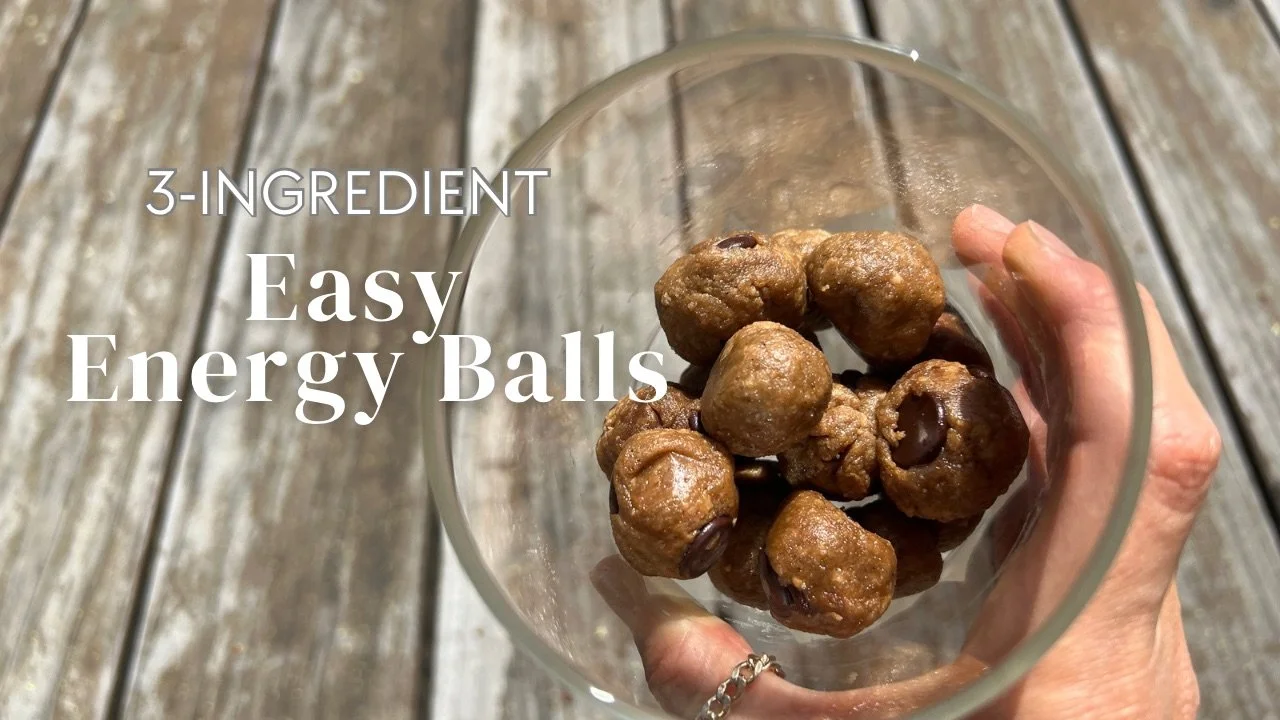
Easy Energy Ball Recipe
Consider this the ultimate guide to creating a legit energy ball base. Once you’ve mastered the fundamental tips you can take your creativity to the next level and make ANY energy ball you’d like without worrying about what health or blood sugar ramifications it may have on you or whoever you’re feeding it to.
the kicker: it only takes 3 simple ingredients
(watch video to find out more)
This Energy Ball recipe supports antioxidant production, mood & appetite regulation, and energy levels primarily thanks to the BWBK Protein Powder.
Why these Energy Balls are Unlike any of the Rest
Just 3 simple ingredients. What you add beyond that is totally up to you. It is customizable.
It contains only ingredients known to be gut & skin supporting, blood sugar & hormone balancing, and mood improving foods. The balance of quality fat, fiber, and protein rich ingredients can help anyone interested in having a healthier waistline, growing healthy babies, losing postpartum weight, feeling energized, staving off cravings, and enjoying mental clarity.
It’s literally for everyone: the athlete, the toddler who knows how to chew (; and it’s especially for the new mum / weaning mum who could use a one handed snack and natural/clean energy at any time of the day
It’s so easy to make that my toddler demands I let her in on making each batch with me 🤝🏼
Fun fact:
celebrities like Jessica Alba & Jennifer Garner use this protein powder to achieve their health goals too!
Ingredients
2 scoops *Be Well By Kelly vanilla protein powder
2 scoops Acacia fiber (I use wellmade brand)
3 tbsp coconut flour
Sprinkle of Maldon Sea Salt (optional)
Dash of cinnamon (optional)
Handful Santa Barbara Chocolate chips (kind of optional)
4 tbsp Sunbutter
3 tbsp water
(for extra benefits) Drizzle 1 tbsp of *BeeKeepers Naturals Superfood Honey 🤤
Mix dry ingredients first! Stir in sunbutter. Add water last. Roll into balls and store in fridge immediately to get a firmer texture.
Can I make swaps to the ingredients?
Yes, and no!
YES: For the Sunbutter, yes you can totally go for whatever nut/seed butter is your jam.
NO: For the protein powder, other protein powders do not have the same composition, taste, and qualities as the Be Well By Kelly Vanilla protein powder used for the base of this recipe— and likely will not contain all the benefits we intend for this recipe to provide.
NO: For the coconut flour, other flours have a very different profile in texture so I cannot promise the ball will stick together and hold it’s form!
It’s so easy to make that my toddler demands I let her in on making each batch with me 🤝🏼
Why Be Well by Kelly protein is the only protein powder I recommend
I will never recommend a product I don’t love and trust to my clients (or to you) - the quality of BWBK protein powders is the best I’ve seen on the market.
The process & purity— ONLY heat & water is used in the extraction process, like how we would make pure bone broth PLUS it has only 3 ingredients. The monk fruit is literally from the fruit itself and makes the powder delicious without messing with my blood sugar levels. (I literally wore a Levels Continuous Glucose Monitor and confirmed the results).
The protein powder gives you steady energy, longer windows of satiation, and one happy gut/skin situation.
Get your protein powder at BeWellByKelly.com and use discount code MUMWITHABUN for $5 off. You can get further discounts by bundling your purchase. Sample packs are also offered.
Energy Ball Ingredients
Be Well by Kelly Vanilla Protein ($5 off discount code: MUMWITHABUN)
Coconut flour* for $4.04 at Thrive Market
Sunbutter* For $8.09 at Thrive Market
Ceylon cinnamon* For $8.99 at Thrive Market
Maldon Salt* For $6.19 at Thrive Market
Superfood Honey (20% off discount code: MUMWITHABUN)
*Use my link for 40% off your first order at Thrive Market
I hope you make these and that you genuinely enjoy them.
Follow for more recipes, discounts, and health-related tips!