A 30-Day CGM Experiment for PCOS: Food, Stress, Sleep, ACV, Bitters & Berberine (While Breastfeeding)
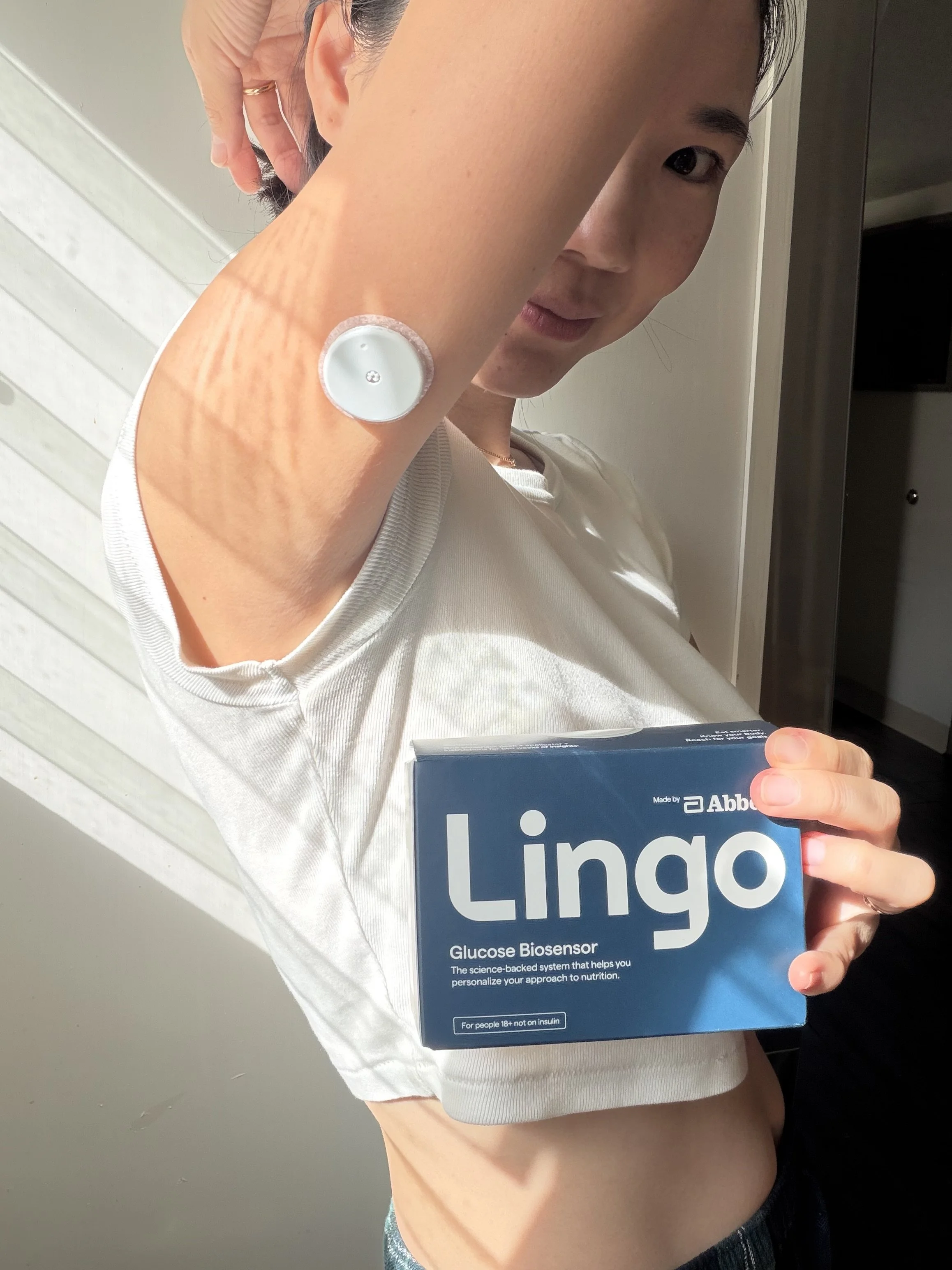
I am not affiliated with any CGM monitoring brand. Just passionate about blood sugar balance ♡ This time I’m using Lingo as it’s more affordable!
If you have PCOS, rising A1C, postpartum hormone shifts, or chronic stress… and you’re like me, you’ve probably wondered:
How much am I spiking from pizza? Are “protein & veggies” first hacks working?
Is honey “spiking” me?
Which hack works best with my body? Walking? For how long?
Does my GlucoBitters work with high carb consumption?
Does apple cider vinegar really work?
Is berberine worth it? Is it safe for breastfeeding?
Is my blood sugar / A1C worse because I’m stressed? Is it caused by my sleep?
Instead of guessing, I decided to gather my data — and share it.
I’m wearing a continuous glucose monitor (CGM) for 30 days and running structured experiments using:
Baseline meals (no interventions — just eating the way I always do)
Apple cider vinegar (ACV) before eating sweets/carbs
GlucoBitters before sweets/carbs
Berberine (used sparingly) before meals/treats I KNOW tend to spike me
Post-meal movement (walking)
Stress support before bed
NOTE: This is not medical advice. This is self-experimentation with my data.
If you’re a mum dealing with PCOS, leaky gut, skin issues (acne/eczema), postpartum shifts, or rising A1C — follow along and decide what fits your lifestyle.
Why I’m Using a CGM for PCOS
PCOS is fundamentally a metabolic and insulin sensitivity condition.
Even if your labs are “normal,” you (technically) can still experience:
Post-meal or snack spikes
Reactive dips (I’ve actually passed out before I understood glucose crashes)
Elevated fasting glucose (which unaddressed can move toward prediabetes/diabetes)
Stress-induced glucose elevation
I previously used a CGM through Levels, but for this round I’m using Lingo because it’s more affordable and accessible (not affiliated).
A CGM gives you:
Real-time glucose data
Meal response curves
Overnight trends
Stress pattern insight
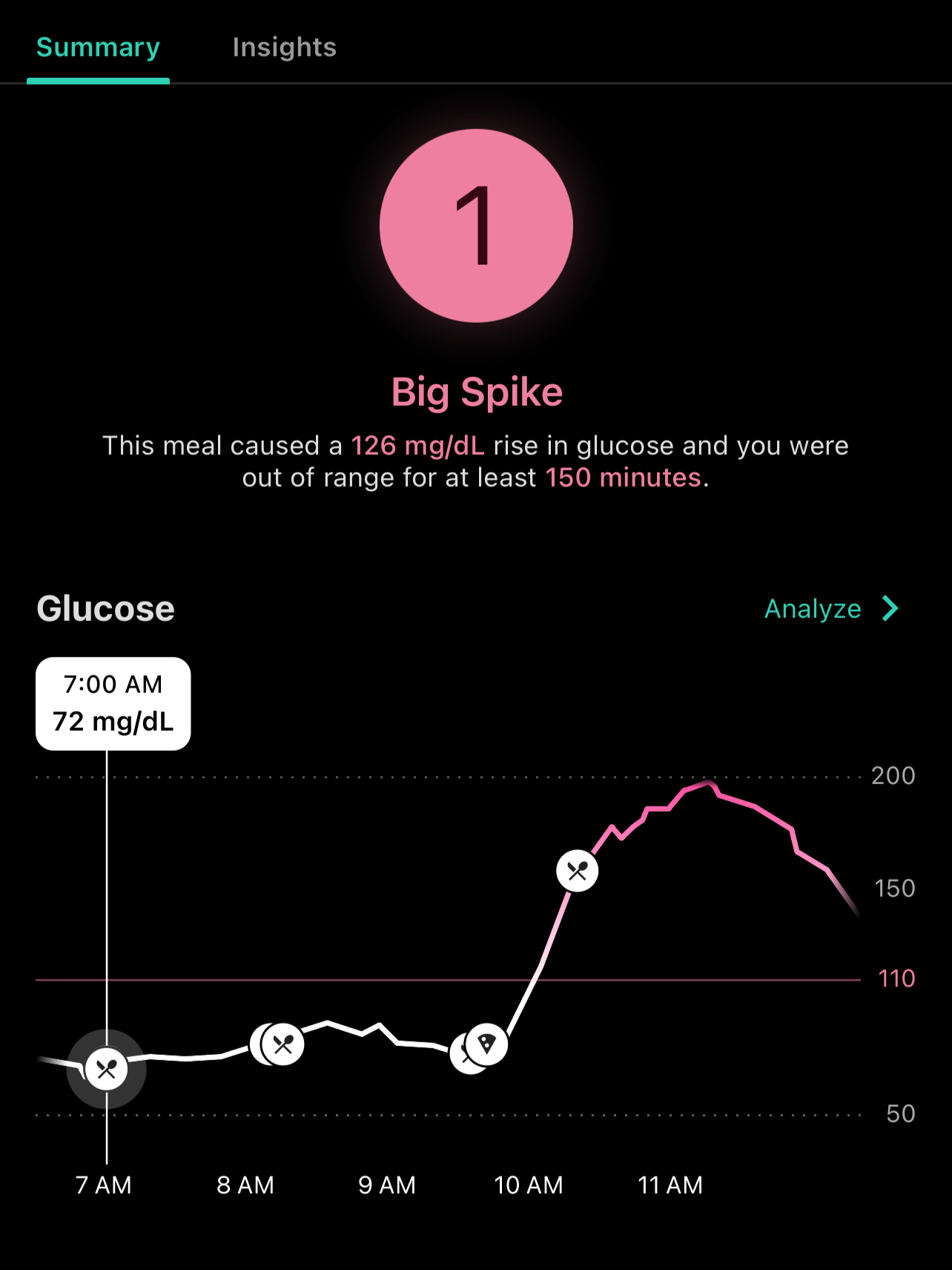
This is what it looks like to get data from a CGM.
Last time I had a CGM (~3 years ago) I was shocked by how much I spiked from a few slices of sourdough pizza…
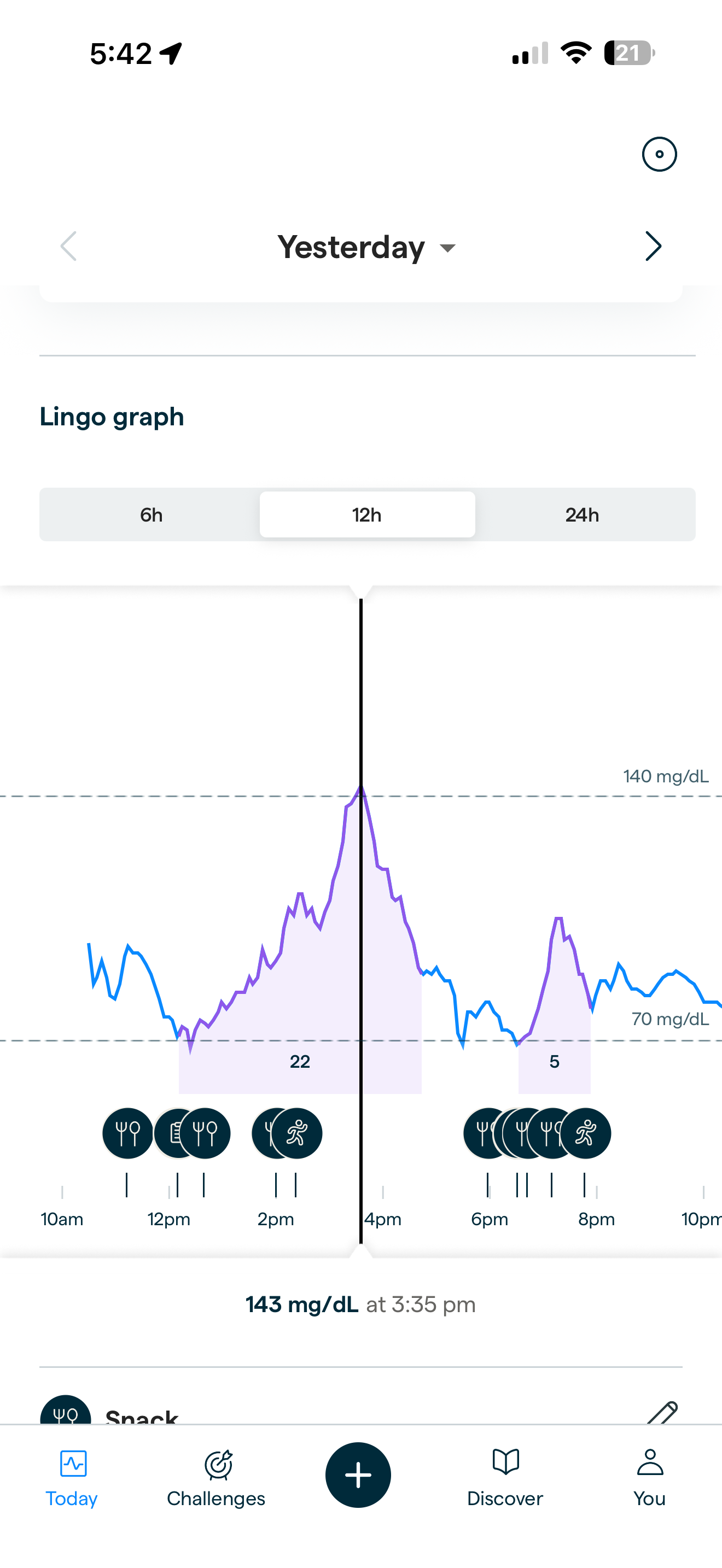
The top image (black) was my glucose spike reaction to 3 slices of pizza in February 2022. 4 years ago. 200mg/dL.
The second image (white) was my much smaller glucose spike to 3 slices of pizza in February 2026. 3 days ago. 143mg/dL.
3 pizza slices took me “out of range” or above 110mg/dL for 150 minutes a few years ago vs 60 minutes this week.
What this proves: My metabolism has improved so much from using the hacks & tools I’m about to share with you.
Note: A CGM does NOT diagnose disease. It gives me a live reading of patterns under my skin.
And these patterns tell me stories annual blood tests cannot.
Important Context: I’m Breastfeeding + Managing Stress
I’m a SAHM, homeschooling, allergy mum life, and running a nutrition business.
Breastfeeding:
Increases glucose demand
Can lower fasting glucose
Can create overnight dips
Stress:
Raises cortisol (stress hormone)
Elevates glucose independent of food (sometimes more than a cookie on an empty stomach — it’s wild!)
Can worsen insulin resistance in PCOS and thereby worsen PCOS symptoms. More spikes = more insulin resistance = worse PCOS.
So my goal is realistic and obtainable.
Not zero spikes / a perfectly flat line.
My goal is:
Stable curves
Faster return to baseline
Lower fasting glucose
Fewer stress-driven elevations AND crashes
The 30-Day CGM Experiment Plan
Because one week isn’t enough!
Four weeks allows:
Baseline mapping
Tool / Hack testing (the tools/hacks = bitters, acv, berberine, movement)
Repeat testing
Lifestyle adjustment
Trend confirmation
Phase 1: Baseline (Days 1–7)
No hacks (No ACV. No bitters. No berberine.)
I will eat normally:
Protein-rich meals
My usual honey sweetened food and fruit
Bites of my favorite rice cake snacks
Birthday celebration desserts (yes, it’s that month)
Ice cream 1-2x a week (affogatos included ☕️🍨)
Coconut sugar in my fav protein powder
Sourdough pizza, Indian food, rice noodle, fun foodie nights
I will track:
Peak glucose
Time to peak
Time to return to baseline
Time above 140 mg/dL
Fasting glucose
Stress (1–10 scale)
Sleep quality
Overnight lows
This establishes MY metabolic baseline.
Phase 2: Single-Tool Testing (Days 8–18)
One tool at a time. (see below for my holistic tools)
Experiment 1: Apple Cider Vinegar (ACV)
Popularized in part by Jessie Inchauspé.
Protocol:
1 tablespoon ACV in water
10–15 minutes before the SAME baseline meal
What I’ll Measure:
Lower peak?
Slower rise?
Faster return?
Experiment 2: GlucoBitters
Taken before the same repeated meal.
Measure:
Spike height vs baseline
Digestion speed
Overall curve smoothness
Experiment 3: Berberine (Used Sparingly)
Important: If breastfeeding, please speak to your provider. Berberine is often cautioned during lactation. My child is well over 18 months, and I will use it sparingly.
I will only use berberine:
Before a higher-carb meal
Not daily
Not stacked with other interventions
Measure:
Peak height
Area under the curve
Next-morning fasting
Experiment 4: Post-Meal Movement
10-minute walk within 15 minutes of finishing a meal
This is often more powerful than supplements.
Measure:
Peak reduction
Faster recovery
Experiment 5: Stress Intervention at Night
I’m using a pregnancy & breastfeeding-safe tincture before bed (from WishGarden).
Because cortisol can:
Raise fasting glucose
Create early morning spikes
Disrupt overnight stability
I’m tracking:
Overnight variability
Overnight dips
Morning fasting glucose
If stress reduction improves fasting numbers — that’s valuable info for me!
Phase 3: Combination Strategy (Days 19–26)
Now that I know what works individually, I’ll test smart combinations:
ACV + walk
Bitters + food order (protein first, carbs last)
Stress support + higher-carb dinner
Berberine + celebratory meal / treats
This phase is about sustainability.
Phase 4: Real-Life Simulation (Days 27–30)
I’ll apply what worked and see:
Is my average lower?
Are the spikes shorter?
What About Low Readings in the 60s or 70s?
I had very low readings last time I did this — CGMs can show:
Compression lows (sleeping on the sensor)
Rapid dips that self-correct
Dips due to breastfeeding
70 mg/dL is low-normal.
Below 70 repeatedly + symptoms = something to keep an eye on.
If I see:
Frequent dips
Symptoms
Rebound spikes
I’ll discuss it with my practitioner.
Breastfeeding can increase overnight variability — so ya context matters.
How I’m Interpreting My Data
Instead of obsessing over single numbers (I did that last time… not helpful), I’m asking:
How high did it spike?
How long did it stay elevated?
How quickly did it return to baseline?
Did stress change the curve?
Did sleep change fasting glucose?
For PCOS, many experts suggest:
Post-meal peaks under 130–140 mg/dL
Return to baseline within 2–3 hours
Fasting ideally under 90–95 mg/dL
Learning my body in real time is the goal.
What I Suspect I’ll Learn
Dessert after protein may spike less than expected
Rice-based foods may spike more than expected
Certain fruit may spike faster than berries
Stress may spike me more than honey
Movement may outperform supplements
We’ll see.
Should You Try a 30-Day CGM?
Each Lingo sensor lasts up to 14 days continuously.
Four weeks allows you to:
Identify your biggest spike triggers
Test ACV vs bitters vs berberine vs movement
See if stress affects fasting glucose
Evaluate if small desserts actually matter for ME
14 days changes awareness.
30 days changes patterns.
Final Thoughts: This Isn’t About Food Fear
I’m not eliminating fruit/honey. I’m not going for a flat line (been there, perfectionist mode activated, zero stars do not recommend).
I’m looking for:
Metabolic flexibility
Sustainable patterns
Data-driven clarity
Peace around food
Because in motherhood, PCOS, healing, stress recovery, and life — perfection is never the goal.
Hope, empowerment, motivation, and peace is my goal.
My 30-Day Tactical Breakdown
Day 1 (Feb 28 – Pizza Lunch Launch)
Applied sensor in morning (a few min before breakfast)
Ate my carb-heavy pizza lunch as planned
No interventions
Watched:
Peak (as expected)
Delayed spike (3–5 hours later — quite common with pizza)
Update:
This provided me with a “worst-case real-life baseline.” I spiked very high (142) but not as much as I did 4 years ago (200+ before I started applying hacks).
Conclusion:
applying the “eat in order” hack consistently over a span of 4 years has helped me achieve more metabolic flexibility (143 vs 200+ is a huge improvement)
My Usual Daily Pattern (Baseline Week)
Breakfast:
Chicken Soup (Update: very stable / no spike)
Parmigiano Reggiano (50-100g) followed by coconut latte + 1/2 scoop BWBK Grass-Fed protein (Update: very stable / no spike. No cravings/hunger until lunch)
Cauliflower rice + ground beef + Pecorino Romano bowl #1 followed by coffee + honey in bowl #2 (Update: very stable / no spike. No cravings/hunger until lunch)
Same as above w/ ½ date w/ Brazil nut & butter (TBD)
2 eggs + cheese omelette + black coffee (update: no spike but very hungry by 11am)
What I’ll watch for:
Coffee impact
Date / Honey spike
How long each breakfast sustains me
Lunch:
Protein-rich broth soup + rice cake
or
Fruit + Cheese (usually parmigiano reggiano) + homemade protein bar (contains a touch of coconut sugar + grass fed beef protein + Mac nuts)
or
Cheese + raw honey + Macadamia Nuts / Brazil Nuts + coconut latte w/ BWBK Grass-Fed protein (my busy day grazing meals)
What I’ll watch for:
Grazing vs structured meal response
Rice cake spike vs fruit spike vs honey spike
Dinner:
Beef/animal protein + cheese + fruit
Watch:
Evening carb tolerance
Overnight stability
Weekly Structure Overview
Week 1
Mostly capturing baseline. While eating in the “right order” as I normally do. (Veggies/protein first, carbs/sweets last)
Week 2
ACV tests (repeat same meals as Week 1).
Week 3
Bitters + movement comparisons (repeat same meals as Week 1)
Week 4
Berberine (only 2–3 times total)
Final 4 days:
I’ll live normally and assess averages. See which hack my body responds best to.
How I’m Maxx-ing The 30 Days
Repeating the same test meal at least 3 times.
Test higher-carb meals at lunch AND dinner (see a difference).
Track stress honestly.
Avoid restricting aggressively. (I did this last time with a CGM and didn’t get very reliable data)
Don’t chase flat lines. (Some rise even on a pure protein meal is normal)
Even “pure protein” can raise glucose slightly because:
Protein stimulates glucagon
Glucagon tells liver to release a little glucose
A bit of a glucose bump can actually indicate:
Liver is responding normally
Insulin is responding appropriately
No exaggerated spike means I’m metabolically calm.
My focus: data gathering and what tools / hacks work for my body.
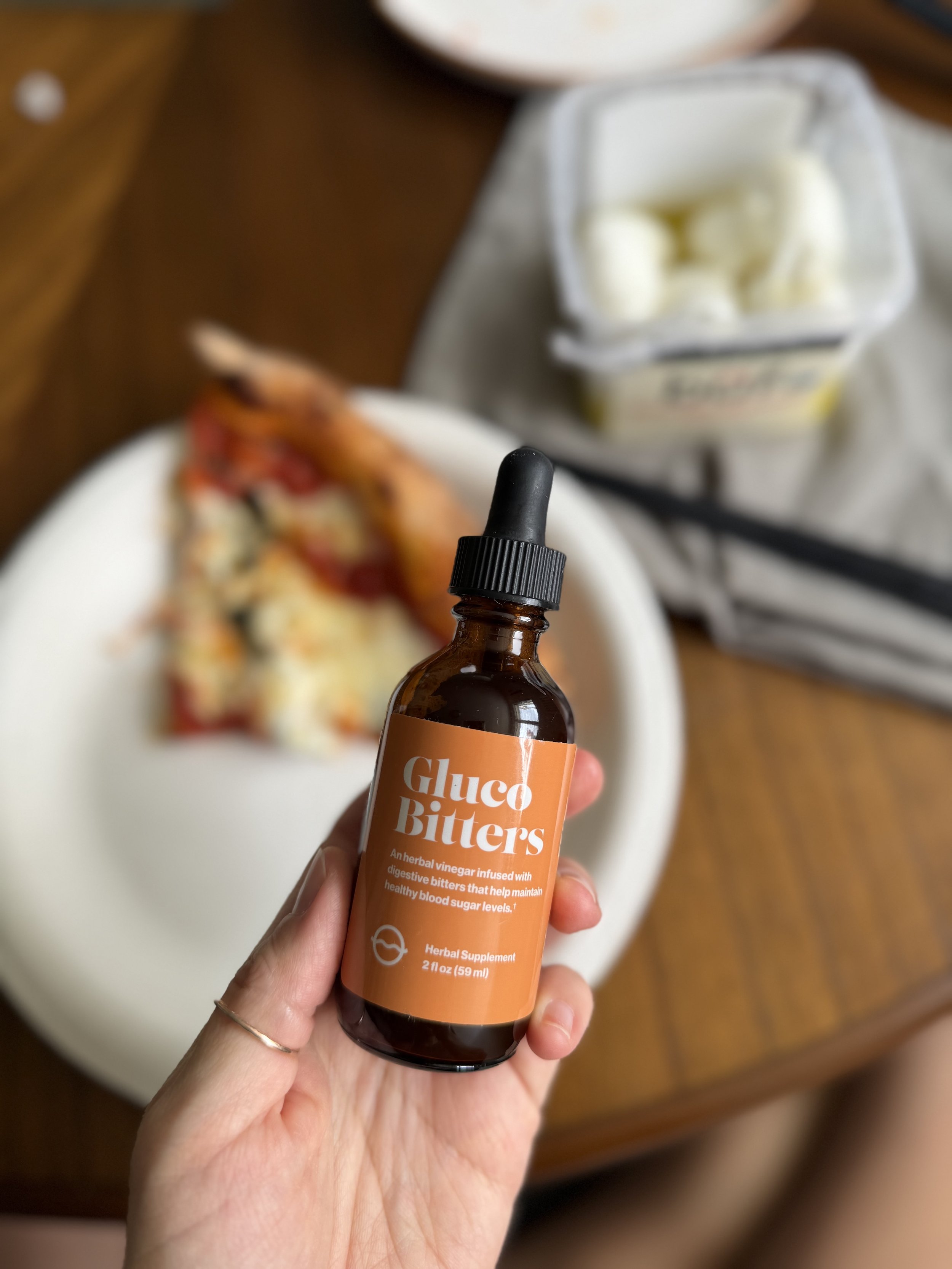
GlucoBitters is what I lean on the most this season as I want a confirmed “Nursing Safe” herbal supplement that helps me obtain
glucose balance even with occasional sugar and carbohydrate cravings
healthy, normal insulin sensitivity
Metabolic support for PCOS
normal testosterone levels
healthy weight management while eating a sensible diet and exercising
stable mood + energy levels
conversion of carbohydrates for energy
Here’s my link if you’d like to try it: https://www.organicolivia.com/products/glucobitters-1?sca_ref=10162371.uUYXm0qS82QyZn