Lotus Seed Tremella Dessert Soup
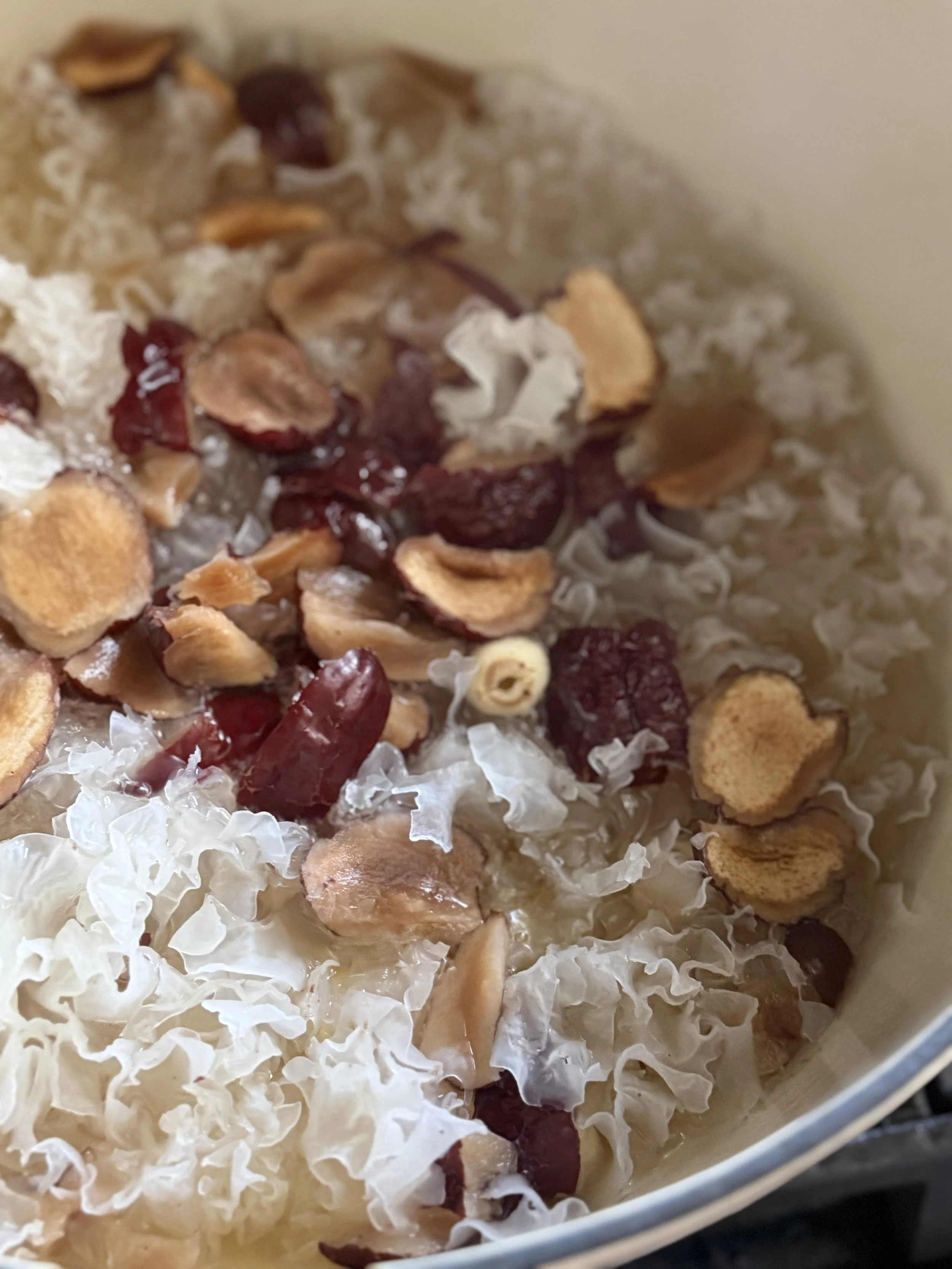
A gentle lotus seed tea with tremella, jujube, and the same beauty-soup base you loved—with a different purpose.
The Calming, Nourishing Tea for Busy Mums
OMG, I wish I knew about lotus seeds when I was freshly postpartum.
There is something about this little bowl of warm, gently sweet soup tea that feels like a deep exhale + a warm hug.
I really wish someone had made me a cup of this every day during those early postpartum days.
Even now, two years postpartum and still breastfeeding, I find myself embracing it when I feel like the day/week has been a lot—when I'm overstimulated, exhausted, touched out, or just craving something warm and really grounding.
If you saw my Tremella Dessert Soup reel, this recipe will look familiar.
The base is essentially the same, but adding lotus seed changes the character of the recipe and gives me another reason to make it.
Think of this as my lotus seed version of the tremella beauty soup: lightly sweet, creamy, a bit nutty, gut health supporting and incredibly comforting.
And because so many of you asked:
“How do you add lotus seed to your Tremella Beauty Tea?”
Here is exactly how I do it.
Why Lotus Seed?
Lotus seeds (Yeon Ja Ryuk / 연자육) have been used traditionally in in South Korea as a medicinal herbal & wellness supplement. Historically it was valued as a royal health food. Today Koreans use it in tea & herbal remedies a.k.a. “HanYak” (not yummy, lol) rather than in desserts - using it in sweets is more of a Chinese / Japanese cuisine take.
They're especially interesting to me because they make this Chinese dessert soup feel less like a sweet treat and more like a nourishing, comforting food I can joyfully incorporate into my regular routine.
Lotus seeds are traditionally associated with supporting a calm mind, stronger digestive system, and metabolic + heart health. Because of its ability to help with deep sleep most enjoy it in the evening,
Lotus seeds are often paired with jujube (red dates) as a nighttime drink.
Personally, I've been enjoying mine in the morning.
Why?
Because I'd rather support myself before the overstimulation and exhaustion hit than wait until I'm already running on empty.
That has felt especially relevant in motherhood.
This isn't a magic elixir or a replacement for sleep, nourishment, or nutrient dense food—but it is a small, impactful beverage that helps me slow down, re-balance, and take care of myself & others ♡
Lotus Seed Tremella Dessert Soup
Makes approximately 4-5 servings
Ingredients
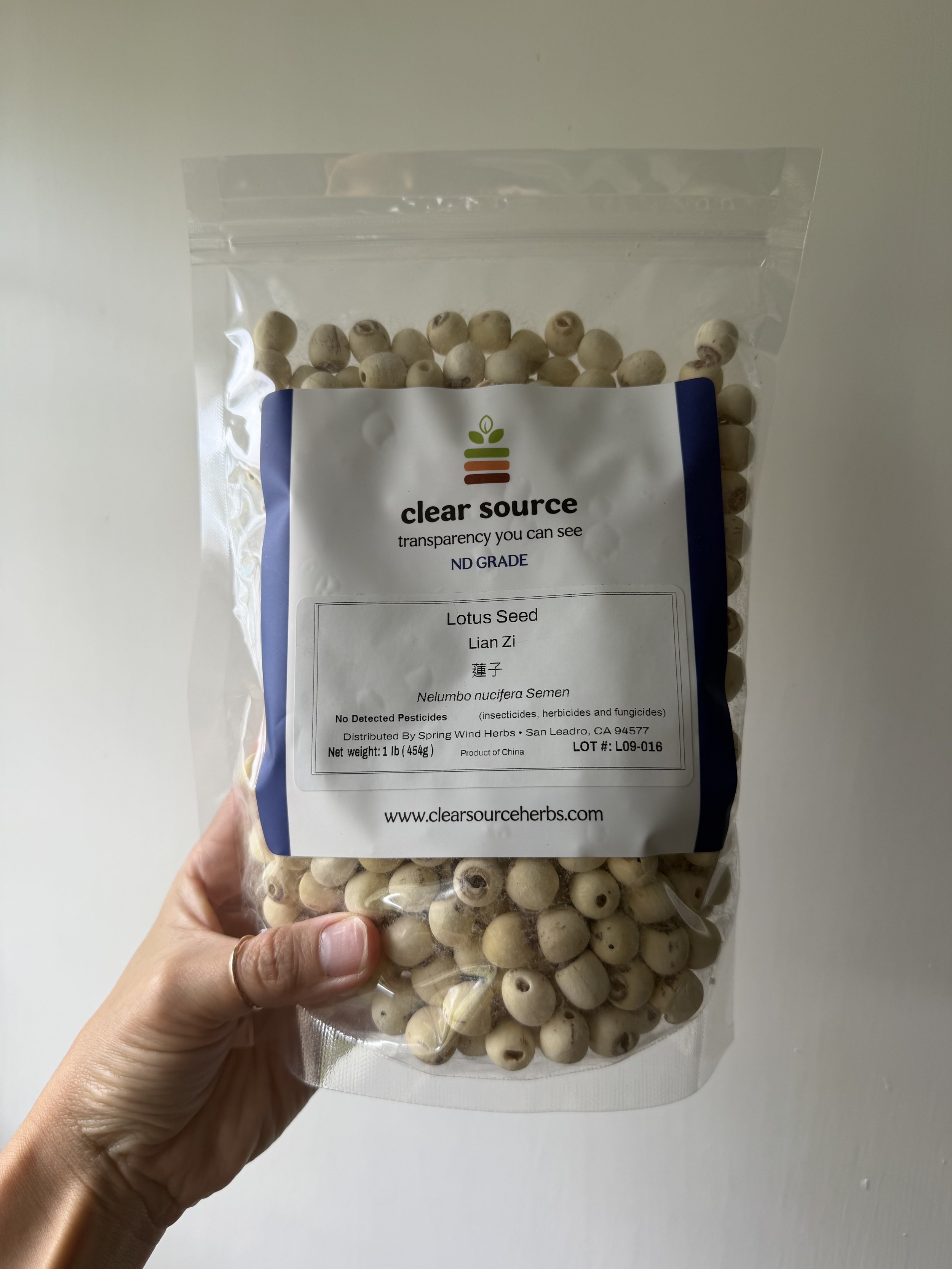
35 dried lotus seeds, skin removed
1 whole tremella / snow mushroom, soaked and stem removed
7 organic jujubes (red dates)
8 cups filtered water
Shop the ingredients I personally use and trust below.
Before You Buy Your Ingredients
This is the part I really want you to read.
If you're going to start incorporating traditional Korean/Chinese herbs, mushrooms, and dried fruits into your food, quality matters.
Unfortunately, “natural” doesn't automatically mean clean.
Depending on how ingredients are grown, harvested, processed, and stored, dried botanicals can potentially be exposed to things like pesticides, chemical residues, sulfur/gas treatment, or other contaminants related to negative issues.
And when I'm making something that I'm going to consume regularly—especially during seasons of motherhood/breastfeeding when I'm already thinking about supporting my body/nursing baby—I don't leave quality up to chance.
What I look for when buying dried lotus seeds:
1. Food-grade dried lotus seeds
Look for lotus seeds specifically intended for culinary consumption.
2. ND / “No-Detected” testing
Whenever possible, I look for suppliers that provide rigorous testing and documentation for contaminants and chemical residues.
3. Ivory-colored seeds
If you're buying the skin-off variety, I look for a relatively clean ivory color.
4. Firm texture
They should feel firm rather than soft, damp, or unusually brittle.
5. Minimal wrinkling
Pick seeds that look plump and relatively smooth.
6. De-seeded lotus seeds
Lotus seeds can contain the green embryo/heart in the center, which is noticeably bitter.
If you're primarily making this for a dessert tea/similar reasons as me, I personally prefer the de-seeded variety.
If you are specifically interested in the traditional use of the lotus seed embryo, that's a different preparation—and a much more bitter one.
Where do I buy mine?
I've spent time trying different sources, and I now have a source I personally trust for the ingredients I use in these recipes.
Use code MUMWITHABUN for maximum savings.
How to Make Lotus Seed Tremella Tea
1. Soak the tremella/snow mushroom
Soak the whole tremella in cold filtered water overnight - in the fridge.
Once it's softened, trim away the hard stem/core.
Break or cut the mushroom into bite-sized pieces.
2. Soak the lotus seeds
Ideally, soak the lotus seeds in water for 30 minutes to 1 hour before cooking.
This helps soften them and can make cooking a little easier.
But real-life mom confession:
Sometimes I don't have an extra hour.
When I'm short on time, I simply give them a good rinse in filtered water and add them directly to the pot.
The important part is making sure they are thoroughly cooked and tender before eating.
3. Prepare the jujube
Wash the dried jujubes and slice them.
If yours contain pits, remove them before adding them to the pot.
4. Add everything to the pot
Add:
Lotus seeds
Tremella
Jujubes
8 cups filtered water
Bring everything to a boil.
Then reduce to a simmer and cook for approximately 1 hour, or until the lotus seeds are completely tender.
That's it.
A warm, gently sweet, nourishing dessert soup you can keep in the fridge and enjoy throughout the week.
What Does Lotus Seed Taste Like?
This was one of the biggest surprises for me.
When cooked properly, lotus seed reminds me of the sweet bean-paste filling in one of my favorite childhood Korean breads.
If you've had adzuki bean paste, you'll know the general flavor profile I'm talking about. There are also white-bean fillings that have a similar soft, creamy quality.
Lotus seed itself is:
subtly sweet
creamy
mildly nutty
soft when cooked properly
It's not aggressively “herbal” tasting, which is one reason I find it so easy to incorporate into everyday food.
How Else Can I Eat Lotus Seed?
You don't have to make this dessert soup every time.
Traditionally, lotus seed can be incorporated into a variety of dishes.
Try cooking lotus seeds by adding them into the following:
Chicken soup
Savory stews
Congee / Rice porridge
Herbal teas
Dessert soups
Other slow-cooked dishes
Think of it less as a supplement you have to remember to take and more as a food ingredient you can actually cook with.
How I Store The Tea
Once cooled, transfer the soup to a clean, airtight container and refrigerate promptly.
For homemade soup like this, I recommend enjoying it within 3–4 days for best quality and safety.
If you notice an unusual smell, appearance, or texture, don't eat it.
I usually make a batch and enjoy it over several days. I pour hot water over my daily serving to warm it up and re-liven it.
Lotus Seed FAQ
Can I eat lotus seeds dry?
I wouldn't.
Think of dried lotus seeds more like dried beans than a ready-to-eat snack.
Cook them until they are thoroughly softened before eating.
Do I have to soak lotus seeds first?
No, but I prefer to when I have the time.
A 30-minute to 1-hour soak can help soften them before cooking.
If I'm in a hurry, I rinse them well and cook them directly in the pot, making sure they become completely tender.
What if my lotus seeds are bitter?
Check whether the green lotus seed embryo/heart is still inside.
That little center can have a distinctly bitter flavor.
For this dessert soup, I personally prefer de-seeded / skin-off lotus seedsbecause they're much more pleasant and creamy.
Can I add lotus seed to the original Tremella Beauty Soup?
YES!
That's actually what inspired this post.
The Tremella Dessert Soup I shared last week is the base recipe.
Lotus seed is an addition that changes the recipe and gives it a different traditional food-therapy purpose.
So if you've already been making my tremella soup, this is an easy variation to try.
Is lotus seed good for sleep?
Lotus seed has a loOong history of traditional use in preparations intended to promote a calm, grounded feeling, and it is commonly included in evening foods and teas to help with insomnia.
Some people pair it with jujube as a nighttime preparation.
That said, I wouldn't describe it as a proven sleep treatment.
I will say it works well for helping me in times of stress - it really does a good job of providing my body something deeply nourishing before bed—or, lately, starting my morning with something grounding.
Can I drink this postpartum?
Food ingredients like lotus seed, tremella, and jujube are traditionally used in many nourishing preparations, including postpartum food traditions.
But postpartum recovery is highly individual.
If you're newly postpartum, pregnant, breastfeeding, taking medication, or managing a medical condition, it's worth checking with your healthcare professional before regularly consuming medicinal herbs or herbal preparations.
I got the ok as a breastfeeding postpartum mum and I love it.
Traditional use is not the same thing as medical advice.
What about pregnancy?
Because pregnancy is a unique physiological state and herbal ingredients can have different considerations than ordinary foods, I recommend checking with your prenatal care provider before intentionally consuming lotus seed as a medicinal or concentrated herbal preparation.
That said, I did ask Clear Source (where I source my ingredients) about the safety of tremella & lotus seed for those pregnant / postpartum (on behalf of myself and majority of my clients) this was their response:
“We can’t offer medical advice so it would best to consult a practitioner when consuming herbs, but generally Tremella and Lotus Seed are considered very safe foods and there are no known precautions for consuming them during pregnancy that we are aware of. We also asked our licensed practitioner on staff and they have the same answer.”
Who might enjoy this?
This is the kind of recipe I reach for when I want:
Something gentle, but traditionally known to support those with
bloating/weak digestion
low energy
sleep struggles
diarrhea
postpartum recovery needs
excess discharge / bodily fluids
calming/grounding needs (anxiety/high stress)
A traditional recipe built for supporting mums postpartum + during busy seasons of motherhood
I've personally loved it during those “I am exhausted, overstimulated, and touched out” days.
A Note About Traditional Uses
In traditional Korean & Chinese food therapy, lotus seed is associated with several different traditional functions, including supporting digestion, the heart, the spleen (which in TCM is the part of your body that converts food into energy) and helping “settle” or conserve bodily fluids (think if you have the “runs” you want it to settle/calm down to normalcy, right?)
Hence, you often see lotus seed discussed in relation to things like loose stools, digestive weakness, excessive discharge, and calming/grounding preparations.
Those descriptions come from traditional systems of food and herbal medicine—they aren't a diagnosis or guarantee of a medical outcome.
And if you're dealing with persistent diarrhea, a heart condition, pregnancy-related concerns, or another medical issue, please don't use this recipe as a substitute for medical care.
How Much Lotus Seed Can I Eat?
Rather than treating lotus seed like a supplement with a universal daily dose, I prefer to think of it as a food ingredient.
The amount used in this recipe—about 25 dried seeds spread across approximately 5 servings—is a relatively modest culinary portion.
If you're consuming lotus seed regularly, especially in larger or concentrated amounts, check with a qualified healthcare professional who understands your individual situation.
How Do I Store Dried Lotus Seeds?
Treat dried lotus seeds similarly to other dried beans and pantry ingredients.
Keep them:
In an airtight container
In a cool, dry place
Away from direct sunlight
Away from moisture
A pantry is perfect.
Then There's the Symbolism...
Okay, maybe this is the sentimental mum in me talking.
But the symbolism of the lotus gets me every time.
Lotus flowers grow in dark, muddy waters—and somehow they rise above it and bloom.
There is something so deeply motherly about that.
We can be surrounded by the mess, exhaustion, noise, overstimulation, and uncertainty of everyday life...
And somehow, we keep rising.
We keep blessing those around us.
We keep creating beauty.
We keep showing up.
Maybe that's why this little bowl of lotus seed tea feels like more than just food to me.
It's a reminder to pause.
To be still.
To notice how much God cares.
To nourish myself, too.
Because motherhood can be hard, beautiful and good at the exact same time.
And sometimes the most nourishing thing we can do is simply make ourselves a warm cup of something and actually enjoy it.
If You're a Mum, Save This One
I genuinely wish someone had made this for me when I was freshly postpartum.
And if you have a friend who is expecting, newly postpartum, breastfeeding, or deep in the trenches a.k.a. the “I'm exhausted and touched out” season of motherhood...
Send this to her.
Not because lotus seed is a miracle ingredient.
But because mums deserve to be nourished, too.
More From This Series
Tremella Dessert Soup / Brain + Beauty Tea
If you loved this recipe, start with the original Tremella Dessert Soup I shared last week.
It's the same nourishing base, and you can customize it with different ingredients depending on what you're craving.