The TCM-Inspired Sleep Tea I’ve Been Having Every Night
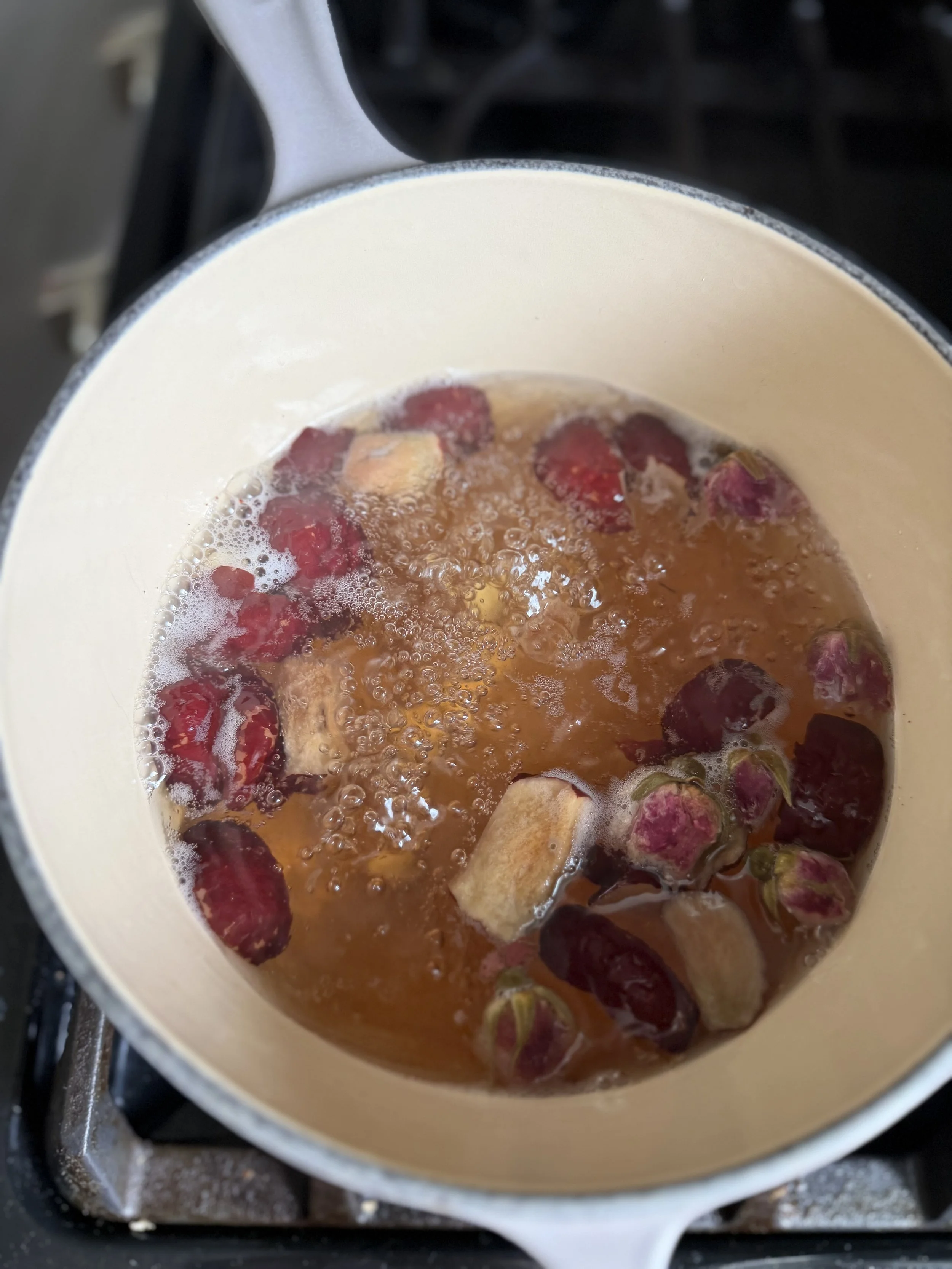
My TCM-inspired sleep tea recipe
Ingredients
30 cubes of organic poria
4 whole dried organic red dates (jujubes)
15 organic lily bulbs
10 organic lotus seeds
4 cups filtered water
optional: 1 organic apple peeled, chopped
Method
Cut open the jujube dates and remove the seeds.
Rinse the lily bulbs & lotus seeds in filtered water.
Add all ingredients to 4 cups of water.
Bring to a boil.
Reduce to a simmer.
Simmer for 20–30 minutes.
Strain into your favorite mug.
Drink warm about 1 hour before bed.
You can eat the cooked jujubes, apple, lotus seeds, and lily bulbs.
I recommend not eating the rose buds or poria.
And if you make it, I hope you enjoy the process as much as the tea itself.
A warm mug.
A little less stimulation.
And permission to rest.
It’s true that sometimes your body doesn't need another thing to do.
Sometimes it just needs you to let it be still.
Details broken down below.
This recipe makes about 2 generous adult servings. If you're only drinking one serving, transfer the remaining tea to a clean, covered glass container and refrigerate it promptly. Reheat gently when you're ready to drink it. I prefer making this fresh, though, because the flavor and aroma are best the same evening.
Why I drank this bedtime tea all week…
There are weeks when your body is asking you to slow all the way down.
That was me this week.
Six days ago, I was in my third major car accident. And because I've been through this before, I already knew what was coming: disrupted sleep, an overstimulated nervous system, and the need for a lot more rest and gentleness than usual.
I couldn't do much this week.
But I could make tea.
And honestly? That little tea time ended up being one of my favorite things.
I started making this TCM-inspired bedtime tea almost every night, and by the end of the week, my whole family had gotten in on it.
It became our little nightcap.
My husband even woke up one morning and asked:
“What was in that tea last night?!”
I had laid down with the kids thinking I was going to have another two hours to myselfafter they fell asleep.
Instead, I fell asleep right along with them.
😂
Now, I want to be clear: this isn't me claiming that a cup of tea can treat trauma, insomnia, or a dysregulated nervous system.
It was a comforting ritual that I personally found supportive during a really difficult week—and the 1 day I skipped it, my body & mind NOTICED in an unpleasant way.
That said, when your body is asking for rest, having something simple, time-tested and nourishing to enjoy at night can make a gentle yet powerful difference.
When to drink this bedtime tea
I like to drink this about 1 hour before bed.
Think of it less as a magic sleep potion and more as an ancestral sleepy time tea.
Dim the lights (highly recommend legit red light bulbs when you can make the switch).
Make your tea. Put your phone away (you can do it!).
Watch the sunset.
Give yourself permission to transition out of the day.
That's part of the wind down, too (:
Ingredient Storage
For the dry ingredients,
Store them:
In airtight containers.
In a cool, dry, dark cupboard.
Away from humidity.
Keep each ingredient separate if possible.
Use clean, dry utensils when scooping.
Follow the package's expiration/best-by guidance.
A note about the jujube dates
If you have access to a good Asian market, I highly recommend looking for organic dried jujube/red dates.
And whenever possible, I prefer buying them whole rather than already deseeded/chopped.
Whole dates tend to retain their freshness longer. Before making the tea, simply cut each date around the seed.
This does two things: it makes them easier to use in the tea, and opening the fruit allows more of that natural sweetness and flavor to infuse into the water while everything simmers.
In TCM/TKM, jujube dates are traditionally considered warming and are used in formulations intended to promote blood circulation and support energy.
I also personally LOVE the flavor of the organic seeded variety my mom has gifted me in the past.
Since we don't have a great selection of quality dried jujubes here on the island of Hawaiʻi, I appreciate being able to order a deseeded organic variety here.
A discount: Use code MUMWITHABUN if you decide to order from them. I asked them for a discount in case you wanted to try.
How to make the tea
1. Prepare your jujubes, lily bulbs, lotus seeds
Cut each whole dried jujube into slices and remove the seed.
This helps release their sweetness and flavor as the tea cooks.
Rinse the lily bulbs & lotus seeds in filtered water.
2. Add everything to a pot
Add the rose buds, poria, prepared jujubes, lily bulbs, lotus seeds, and optional peeled/chopped apple chunks (for a touch of sweetness) to a pot with 4 cups of filtered water.
3. Bring to a boil
Bring the water to a boil.
Once it reaches a boil, reduce the heat to a gentle simmer.
4. Simmer for 20–30 minutes
Let everything gently simmer for 20–30 minutes.
The water will become infused with the herbs, flowers, fruit, and seeds.
5. Strain and enjoy
Pour into your favorite mug and enjoy warm, ideally about 1 hour before bed.
You can eat the cooked fruit, lotus seeds, and lily bulbs.
I don't recommend eating the rose buds or poria.
Why these ingredients?
One of the things I love about traditional herbal practices is that ingredients aren't exactly chosen randomly.
Each ingredient has its own traditional role, and together they can become part of a beautiful and powerful gamechanger.
🌹 Rose buds
Rose is one of my favorite additions to this tea because it makes the whole cup softer and more calming.
In traditional Chinese medicine, rose is associated with harmonizing the body and is commonly used in teas intended to support emotional well-being and circulation.
For me, there's also something about the aroma that immediately signals: it's time to wind down & take care of yourself.
🍒 Jujube / red dates
Jujube, also called red date, is a classic ingredient in Chinese herbal traditions.
In TCM/TKM, dates are considered a warming sleep remedy and are traditionally used to promote blood circulation & rest (beloved by postpartum women for this reason in Korea)
They're also what gives this tea its natural sweetness. Please look for organic.
I love using whole organic dried dates rather than any added sweeteners.
🤍 Poria
Poria is a medicinal mushroom used extensively in traditional Chinese medicine.
Traditionally, it is used in formulas for supporting calmness in the mind, as well as promoting healthy fluid metabolism.
Its flavor is relatively subtle, which makes it easy to combine with more aromatic ingredients like rose and sweet jujube.
Don’t recommend eating it as once it’s been infused the texture isn’t the most fun thing to chew/swallow.
🌸 Lily bulbs
Lily bulb is probably the ingredient that gets the most questions.
It's traditionally used in TCM for several purposes, including supporting the lungs and soothing coughs.
But in this particular tea, I love it for its traditional association with calming the mind and soothing irritability.
It's also traditionally used when symptoms such as restlessness or night sweating are a concern.
And yes—you can eat the cooked lily bulbs after making your tea. It’s nice (:
🌿 Lotus seeds
Lotus seeds…
I’m obsessed how it helps with calming your heart and traditionally it’s known to help with calming stress, soothing the racing thoughts and difficulty falling asleep.
They also become pleasantly tender after simmering.
And, like the jujubes and lily bulbs, they're something you can eat after brewing.
My favorite part: the wind down routine
The ingredients are important, but I don't think they're the whole story.
There's something powerful about having a consistent signal that tells your body:
We're done for the day.
For me, making this tea became that signal.
Especially this week, when I was physically and emotionally recovering from an accident, I needed simple things.
I couldn't tackle a complex wellness routine.
But I could put four cups of water in a pot.
I could add a handful of herbs and flowers.
I could allow my heart delight in how beautiful the ingredients look once they simmer and dance around in the pot.
I could drink something warm.
And then I could sink into the bed. Ready to nourish my breastfeeding toddler.
Sometimes these small moments of gratitude are the most powerful.
How often can you drink this tea?
I personally drank this tea almost every night for six days, (I skipped 1 and regretted it) but that doesn't mean that daily use is appropriate for everyone.
Traditional herbal ingredients can have pharmacological effects and may not be appropriate for people who are pregnant, taking medications, managing a medical condition, or sensitive to particular herbs.
If you're considering drinking this regularly, especially if you're taking medication or have a health condition, it's a good idea to check with a qualified healthcare professional or practitioner trained in Chinese herbal medicine.
And if you're dealing with persistent insomnia, anxiety, night sweats, swelling/edema, or other symptoms, don't use this tea as a substitute for medical care.
For me, as a breastfeeding mum, this is a sleepytime tea—not a medical treatment.
If you’re not going through a significantly stressful time, try quality chrysanthemum tea for a more subtle evening wind down ♡
A note before you try it
While these ingredients are found together in traditional formulas used for sleep-related complaints, that does not establish that my specific tea treats insomnia or anxiety. This tea is not intended to diagnose, treat, cure, or prevent any disease or medical condition. If you are pregnant or breastfeeding, take medications, have a medical condition, or have concerns about using any of theseingredients regularly, consult an appropriate healthcare professional before trying it.