What to Expect When Working With Me
Here’s what happens in a consultation
Upon receiving your food journal and health intake form, I do all the heavy lifting to see what foods to recommend to you considering your health history, current stage of pregnancy preparation / pregnancy / postpartum, health goals, and food preferences.
I take you through a step by step process to help you understand each nutrient you need and how to get it via food. I’ll get to know you, your eating habits, and food preferences so that I can help you incorporate foods that work in conjunction with one another to maximize absorbability so your body can use it during this critical season of your pregnancy journey.
Prenatal Multivitamins & Supplementation
It is up to you if you decide to go with one - I always prefer a food first approach. I will always make recommendations based on a “food first and supplementation as needed” outlook on a case by case basis considering your food intake, unique health history, goals, and more.
I get that during pregnancy, there are so many restrictions. By consulting with me, I will tell you which foods are actually safe (more than you might’ve been told), which foods aren’t great for you/baby (& why), and which foods you can include by empowering you with the information you need to make informed decisions next time you’re craving sushi, cheese, deli meat, and seafoods.
Empowering you without fear
I found in my pregnancy and breastfeeding years that a lot of fear was instilled in me around food and not many options were available considering I struggled with nausea (in pregnancy) and food intolerances.
With my clients, I focus on the benefits of nutrient-dense foods that
play a pivotal role in pre-conception, pregnancy, postpartum
are commonly lacking in the diets of women of child bearing age statistically
fill the gap of nutrient needs that are commonly not addressed and to this day lead to the most common nutrient deficiencies in the world.. as these gaps cause new mums to have difficult health issues and imbalances well into their postpartum years and beyond.
There are certain foods that need to be included in specific quantities and ratios depending on the individual - that’s where I come in.
Final Note
It is an honor to nourish you through your journey before, during, after pregnancy, and beyond by empowering you with science and evidence based knowledge.
I’m so glad you’re here!
Eating Local and Seasonal
“Buy Local Produce - it’s better for you”
I didn't fully understand this concept at first. But as I learned to heal my gut and nourish my body, one of the fundamental principles was to eat local, longitudinal, and seasonal. There’s something about eating the fruits and vegetables that are local to where your body is vs consuming produces that’s been shipped from half way across the world.
Buying vegetables from local farmers is a great way to ensure your produce is picked at its peak, in both flavor and nutrition.
- Lily Nichols RDN, CDE
It makes more sense when you see your food as “alive” - in other words there’s a term called respiration rate.
What is Respiration Rate
When a broccoli is picked and harvested, it contains about 25% of your daily needs of Vitamin C. If it has been 7 days since being picked, that same broccoli now contains 0% of your daily needs of Vitamin C. It eats it’s own nutrients to survive.
The average carrot travels 1800 miles before it reaches your plate. The issue is, as soon as you take a plant (i.e. fruits & veggies) out of the ground/soil it immediately starts losing nutrients.
So if you look at your store bought produce and the label indicates it’s from Mexico, Peru, or half way across the world… that vegetable went on a boat, then a train, a truck, and eventually made it’s way out of the box and onto the store shelf. Meaning that’s a lot of nutrients lost in transit.
A lot of studies show that foods we eat have lost 50% of their value before it gets on our plate.
- Chris Kresser
Local & Seasonal Produce is Healthier
Locally-sourced seasonal fruits and vegetables taste incredible in comparison to it’s equivalent conventionally-grown vegetables. Some taste like literal cardboard…
Why? Literally because local produce has more nutrients still locked in. The tongue can tell.
Which Nutrients are Lost Once Picked?
Antioxidants including:
Vitamin C
Folate
Carotenes
All of which are critical for getting pregnant and sustaining a healthy pregnancy and birth.
Organic Produce
Organic produce also has shown to contain higher levels of phytonutrients and antioxidants.
Quick plug for organic/pesticide free produce—studies show reducing the female body’s exposure to pesticides support a healthy, full term pregnancy and live birth.
If you’re in a pinch, the produce I recommend organic include papaya and the EWG’s top dirty dozen.
Is eating Seasonally more Sustainable?
Not only is eating seasonal and local produce environmentally friendly, but also you get to buy & eat less for the same (if not more) quantity of nutrients because you’re eating produce harvested at its peak.
Financially not in a place to purchase local produce?
Sometimes local produce is cheaper; sometimes it’s not. If finances are stopping you from buying quality produce, opt for frozen organic vegetables and fruits! I for one am a huge fan of costco’s frozen organic broccoli and berries. Sure, the texture won’t be the same but a lot of vitamins and minerals are preserved (i.e. iron, calcium, zinc, magnesium) via freezing. Studies show the vitamin content is occasionally higher in some frozen foods like frozen broccoli, green beans, and blueberries - these foods are said to have more B vitamins and Vitamin C in their frozen state than equivalent fresh varieties. (Source: NYtimes)
Moral of the story: Buy Local & Support Your Local Farmers &/or Frozen Organic Produce Whenever Possible
Chocho Protein: The Regenerative Superfood Changing Plant-Based Nutrition
The Chocho bean is an extraordinary, regenerative superfood that delivers more protein than any other plant source—plus complete amino acids, minerals, fiber, and clean energy. Here’s why it’s becoming the world’s most promising up-and-coming protein source (and how to use it daily).
THE UP-AND-COMING PROTEIN FOOD SOURCE: CHOCHO
A Complete, Regenerative, Nutrient-Dense Superfood
If you’ve never heard of Chocho, you’re about to meet your new favorite protein source. This remarkable lupin bean is exceptionally nutrient dense, environmentally regenerative, and naturally rich in complete plant protein—something incredibly rare in the plant world.
What Makes Chocho Worth Trying?
Chocho is packed with hard-to-find nutrients:
✔️ Complete protein
✔️ Fiber
✔️ Iron
✔️ Calcium
✔️ Magnesium
✔️ Essential minerals & antioxidants
But beyond its nutritional profile, Chocho is also regenerative, meaning its cultivation actively improves the soil it grows in.
Why Chocho Is a Regenerative Crop
Most crops deplete the soil. Chocho enriches it.
As a legume, Chocho naturally pulls nitrogen into the soil, restoring nutrients for the next round of crops. Farmers report Chocho increases soil productivity for the next harvest by over 140%, creating a cycle of regeneration instead of depletion.
Regenerative agriculture supports:
Soil health
Biodiversity
Water conservation
Increased farm productivity
Climate resilience
Chocho checks all the boxes—and more.
Extraordinary Agricultural Benefits
Drought tolerant — requires no irrigation beyond rainfall
Grows without fertilizers
Protects companion crops
Supports small farmers and indigenous agricultural practices in Ecuador
This is sustainability without compromise.
Chocho: A Rare Complete Plant Protein
Very few plant proteins are “complete”—meaning they contain all 9 essential amino acids. Most require combining (like rice + beans), but Chocho stands alone.
Chocho is >54% protein by weight, the highest of any whole plant food.
Compare that to:
Soy: ~36%
Pea: ~34%
Quinoa: ~14%
As Mikuna Foods states:
“Chocho has more protein by weight than soy, pea, and quinoa combined.”
This means Chocho supports:
Muscle building
Blood sugar balance
Hormone production
Tissue repair
Gut lining integrity
Satiety & steady energy
As Kelly LeVeque shares, every cell in your body needs complete amino acids—Chocho finally brings this to the plant world.
But What Is a Complete Protein?
A complete protein contains all 9 essential amino acids—nutrients the body cannot make on its own.
Many plants contain protein but lack the full amino acid profile needed for:
Muscle synthesis
Hormone production
Neurotransmitters
Skin, nail, bone & tissue development
Chocho does it all—without the digestive discomfort many plant proteins cause.
Zero Bloat + Gut-Friendly
Unlike soy, pea, rice, or quinoa proteins—often irritating due to lectins, oxalates, and phytic acid—Chocho undergoes a gentle water + heat de-bittering process that removes antinutrients without harming the nutrients.
No additives. No chemicals.
My toddler and I (both sensitive to many plant proteins) have never experienced bloating, discomfort, or heaviness from Chocho.
The Chocho Bean’s Nutrient Density Is Truly Mind-Blowing
Chocho is naturally rich in:
Manganese
Iron
Calcium
Magnesium
Zinc
Potassium
Vitamin E
Omega fatty acids
Fun fact:
One serving of Chocho protein has as much calcium as a glass of milk.
Its nutrient density is so high that food labs initially refused to believe it was a single ingredient. It had to be analyzed in a pharmaceutical lab.
#superfoodprotein indeed.
Athletes Swear by It
Professional athletes use Chocho to improve endurance, performance, and recovery:
Mick Fanning — 3× World Surf Champion
Leticia Bufoni — 6× X Games Gold Medalist
And more…
Chocho has been a dietary staple in Ecuador for centuries—now the rest of the world is catching up.
How to Use Chocho Protein Powder
Chocho is extremely versatile. Some favorite ways to use it:
1. Shakes & Lattes
I add it daily to my Korean misugaru shake or matcha latte for balanced blood sugar and sustained energy.
(Link your misugaru recipe here.)
2. Baking & Cooking
It works beautifully in pancakes, muffins, and mochi bakes.
(Link your mochi pancake here.)
3. Enhancing Coffees & Matchas
A scoop added to your latte prevents caffeine-related blood sugar spikes and jitters.
4. Smoothies, Sauces & Sprinkles
Chocho’s flavor is mild, earthy, and delicious—no bitterness, no bean-y aftertaste.
It even reminds me of Korean misugaru (minus the allergens!).
Why I Love Chocho Protein
It’s nutritionally superior to any plant protein
It’s a complete protein (rare!)
It doesn’t cause bloating
It’s dairy free, gluten free, soy free, nut free
My toddler and I tolerate it beautifully
It’s ethically grown & regenerative
It’s incredibly clean: just crushed, soaked, and dehydrated
The Chocho Bean Oil
Over 20% of the Chocho bean is high-quality oil rich in omega fatty acids.
According to fifth-generation Ecuadorian farmer Ricky Echanique (Founder of Mikuna Foods):
“Chocho oil is second in quality only to olive oil.”
Where to Get Chocho Protein Powder
Created in partnership between Kelly LeVeque and Mikuna Foods, this is the cleanest, highest-quality Chocho protein on the market:
Use Code: MUMWITHABUN for $10 off any of the following:
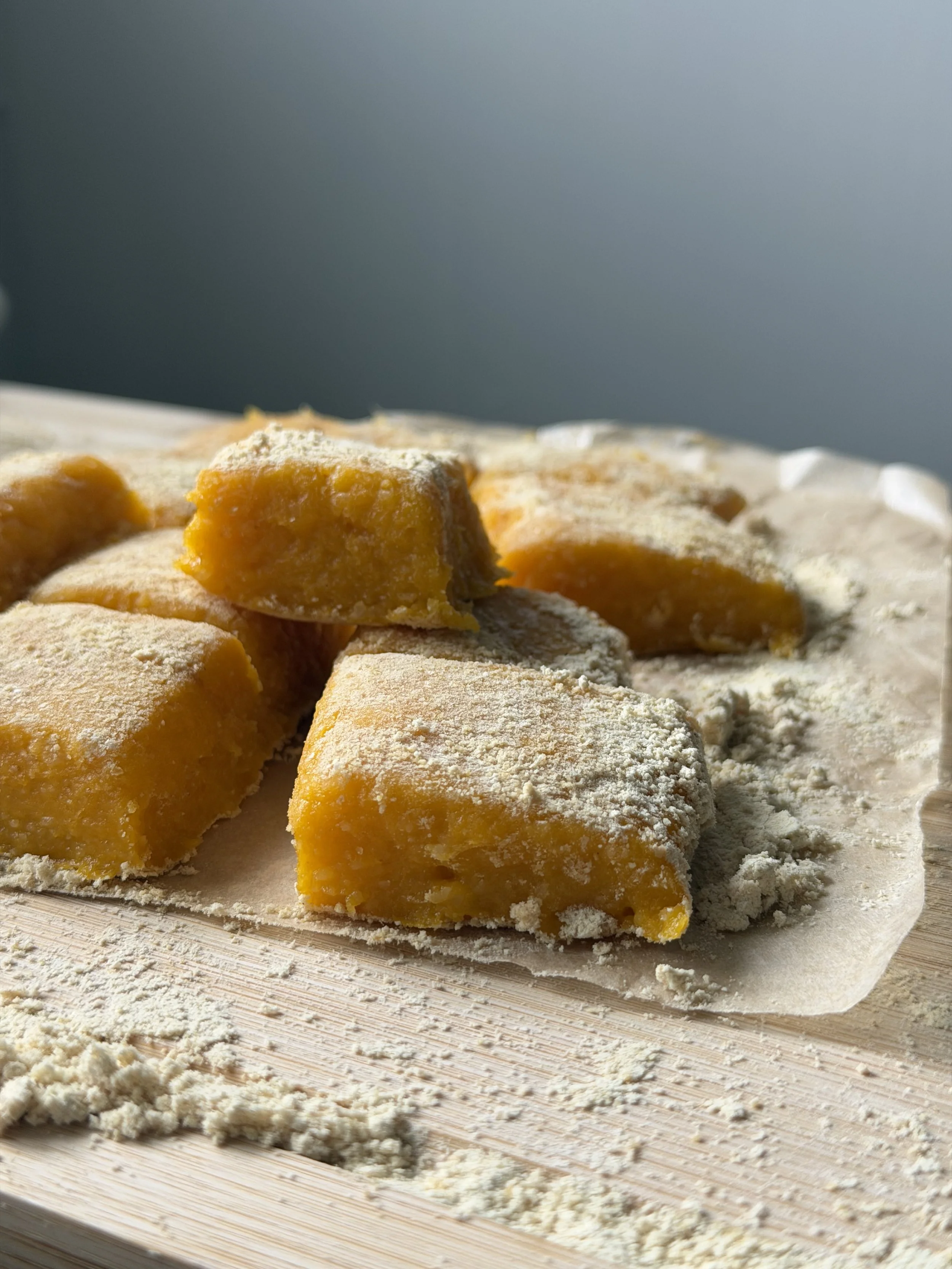
✨ Make Your First Chocho Recipe: Hobak Tteok (Sweet Pumpkin Mochi Rice Cake!)
This superfood pairs beautifully with your Hobak Tteok recipe.
Add Chocho to boost protein, digestibility, and blood-sugar balance—and make your tteok even more nourishing.
👉 Make my Sweet Pumpkin Mochi (Hobak Tteok) recipe here
🎥 Watch the IG reel here
Sources
(All retained as in your original post.)
Be Well by Kelly Interview with Mikuna’s Ricky Echanique
Mikuna Foods
The Spoon Tech Feature
Junge & Reichman Podcast