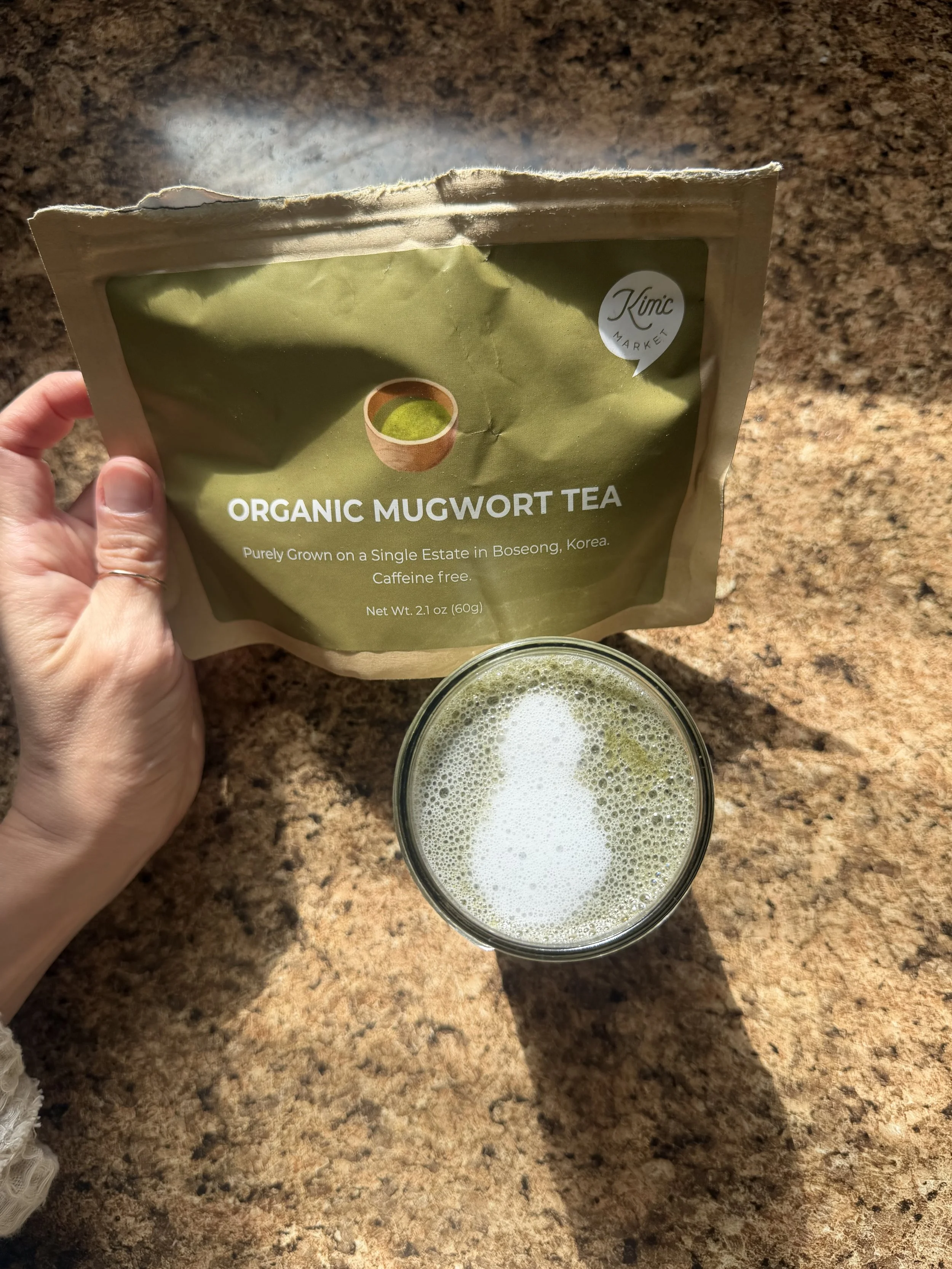
Mugwort Latte with Coconut Milk
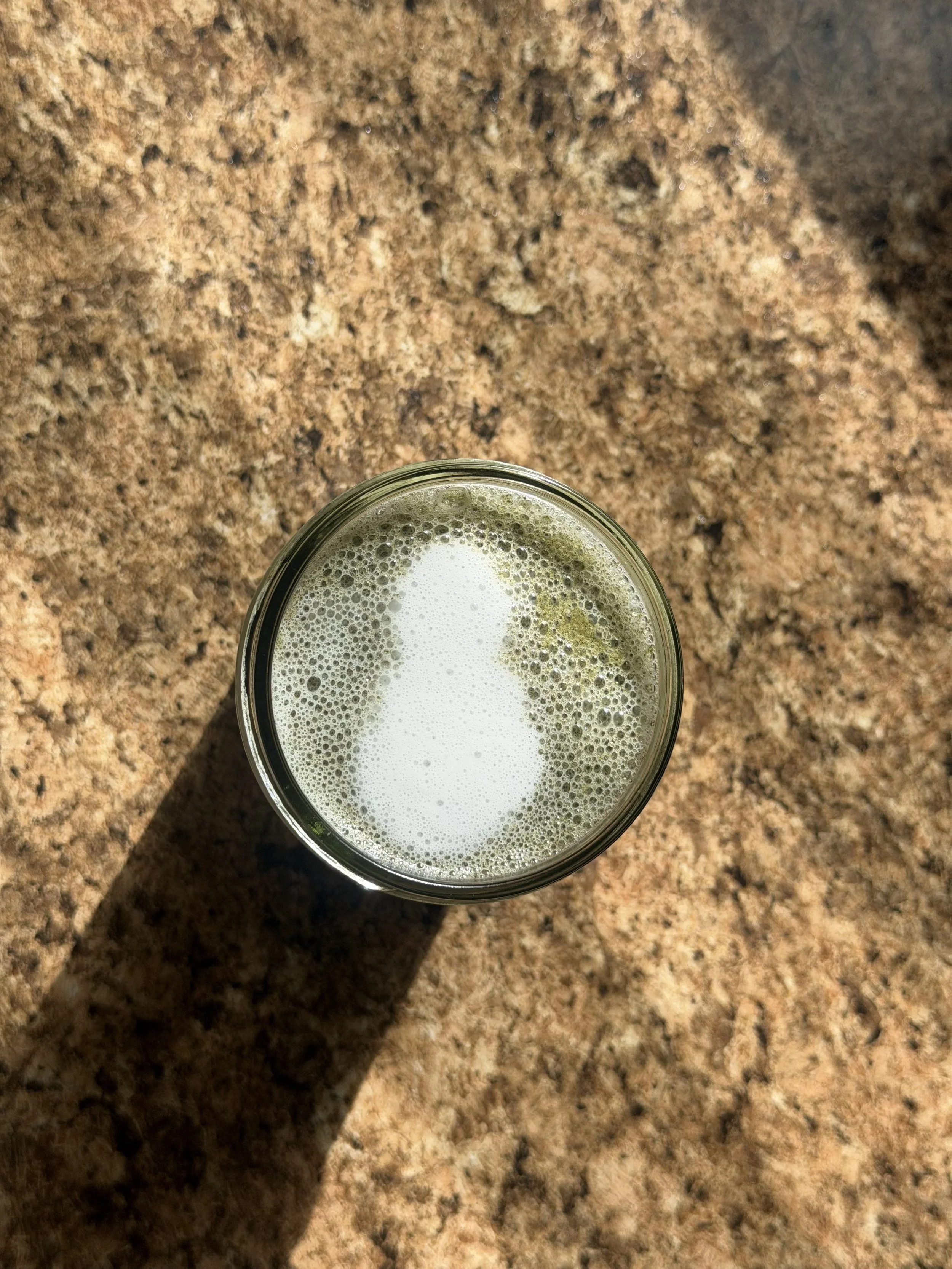
This is not what you think it is. (It’s not matcha. It’s [arguably] better)
If you’re just getting into 쑥 (Sook) — mugwort, a latte is one of the most beautiful (and delicious) ways to experience it. It’s likely going to be trendy real soon. (It’s been a thing in Korea)
Tasting notes: Earthy and very aromatic; mugwort pairs surprisingly well with the rich, velvety body of full-fat coconut milk.
Unlike matcha, mugwort powder is caffeine free, more herbal, and really grounding in flavor, so balancing it with creamy fat and gentle sweetness makes a great difference.
Think: cozy, calming, and actually health-hype-worthy.
INGREDIENTS
1 teaspoon high-quality organic mugwort powder
2–3 oz hot water (just under boiling, about 160°F / 71°C)
4 oz full-fat coconut milk (well shaken or stirred if separated)
Optional: 1–2 teaspoons raw organic honey, to taste
Optional: 1/2 scoop of Be Well By Kelly organic vanilla protein, to taste for those interested in quality protein + managing blood sugar levels while having a latte ♡
METHOD
1. Measure the Mugwort
Add 1 teaspoon mugwort powder to a wide, deep bowl. A soup bowl works perfectly if you don’t have a traditional tea bowl.
2. Heat the Water
Warm 2–3 oz water to just under boiling (around 160°F / 71°C). Avoid boiling water, which can make mugwort taste overly bitter.
3. Whisk the Mugwort
Pour the hot water over the powder.
Using a bamboo whisk (held vertically), stir gently at first to loosen any clumps from the bottom and sides of the bowl.
Then whisk briskly back and forth in a straight line for 20–30 seconds until smooth.
Unlike matcha, mugwort will not create the same bright green microfoam — it produces a softer, more subtle froth.
Finish with a gentle zig-zag motion to smooth the surface.
4. Warm the Coconut Milk
In a small saucepan, gently heat 4 oz full-fat coconut milk until warm but not boiling.
If your coconut milk has separated (common with full-fat versions), whisk or blend it briefly before heating for a smoother texture.
Optional: Froth lightly with a handheld frother for a café-style finish.
5. Combine & Sweeten
Slowly pour the warm coconut milk into the mugwort base.
Stir gently to combine.
Add 1–2 teaspoons raw organic honey if desired. Mugwort has a naturally bitter, herbal profile, and honey softens it beautifully without overpowering its character and body.
Texture & Flavor Tips
Too thick? Add a splash of hot water to lighten it.
Too bitter? Add a bit more honey or a tiny pinch of cinnamon.
Want it extra creamy? Blend the entire drink for 10 seconds.
Prefer it lighter? Use half coconut milk, half hot water.
Choosing Quality Mugwort
Just like matcha (and anything you consume) quality matters.
Look for:
Fresh herbal aroma (not musty)
Vibrant green color (dull brownish tones suggest oxidation)
High-quality powder creates a smoother, less gritty latte and a more pleasant flavor.
Where I Source My Mugwort
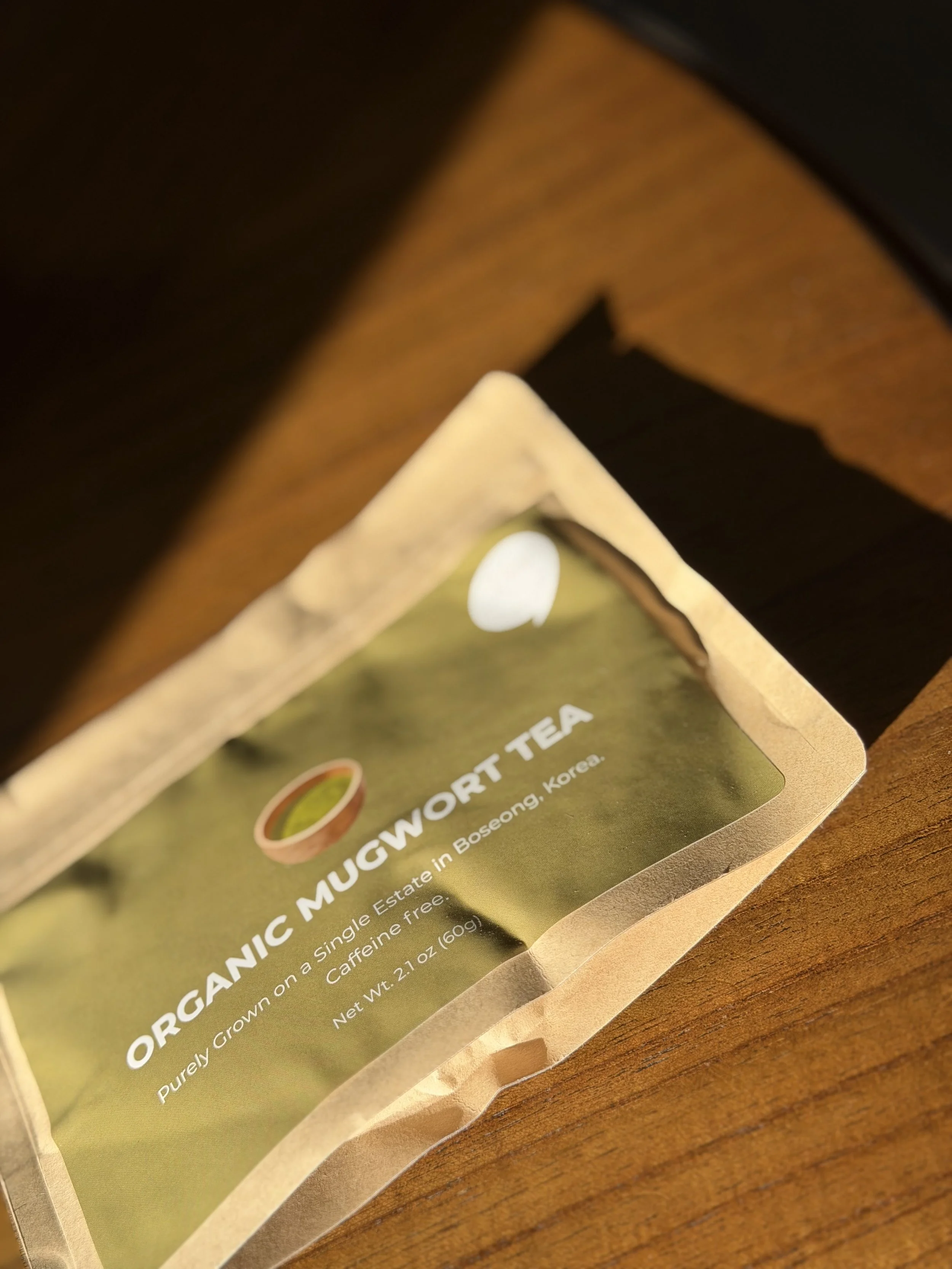
I get mine via Kim’C Market — Their Organic Mugwort Powder is sourced from Boseong, Korea’s tea capital. The high humidity, clean air, and wide daily temperature swings—create ideal conditions for producing flavorful herbs like Mugwort.
Their organic certified field has been thriving in producing tea since 1937. This small family-run farm has grown tea herbs on their land using traditional, chemical-free methods for 80+ years.
What I Love About It
The premium tea is
High-quality: hand-harvested from the hills of Boseong, South Korea (a small county famous for it’s green tea leaves)
Holistic Health Supporting: caffeine-free, great for stress relief, circulation / warming up the body, and digestion
Versatile: I love making Korean mugwort treats in addition to lattes! (More Mugwort Treat Recipes to come!)
Antioxidant rich: it’s anti-aging properties protect the skin barrier making it a key ingredient in K-beauty skincare
What matters most to me - especially for gut health - is how the food is grown, processed, and appreciated by my unique body.
Read on to make sure it’s a fit for you.
The Health Element
Part of the beauty of a mugwort latte is the health aspect:
Hormone Support: Many women love it for it’s ability to warm the body and help with amenorrhea as well as PCOS symptom management
Digestive Support: Mugwort can aid digestion, stimulate digestive juices, and help with issues like bloating
Stress and Mood Support: As a mild nervine and sedative, it may help manage anxiety, depression, and stress
This is not just a yummy herbal drink — it’s food as medicine.
Who Mugwort Is Not For
Pregnant Mums: Due to its uterine-stimulating properties, mugwort should be avoided during pregnancy.
Those with Allergies: Mugwort is in the daisy family (Asteraceae), so people with allergies to related plants (like ragweed) should consider this before trying mugwort.
Savings On The Ingredients I Use
I get my Organic Mugwort Powder from Kim’C Market.
If you’d like to try it, they’re gave me a limited time $5 off for your first order of $49 or more. Use code MUMWITHABUN at checkout.